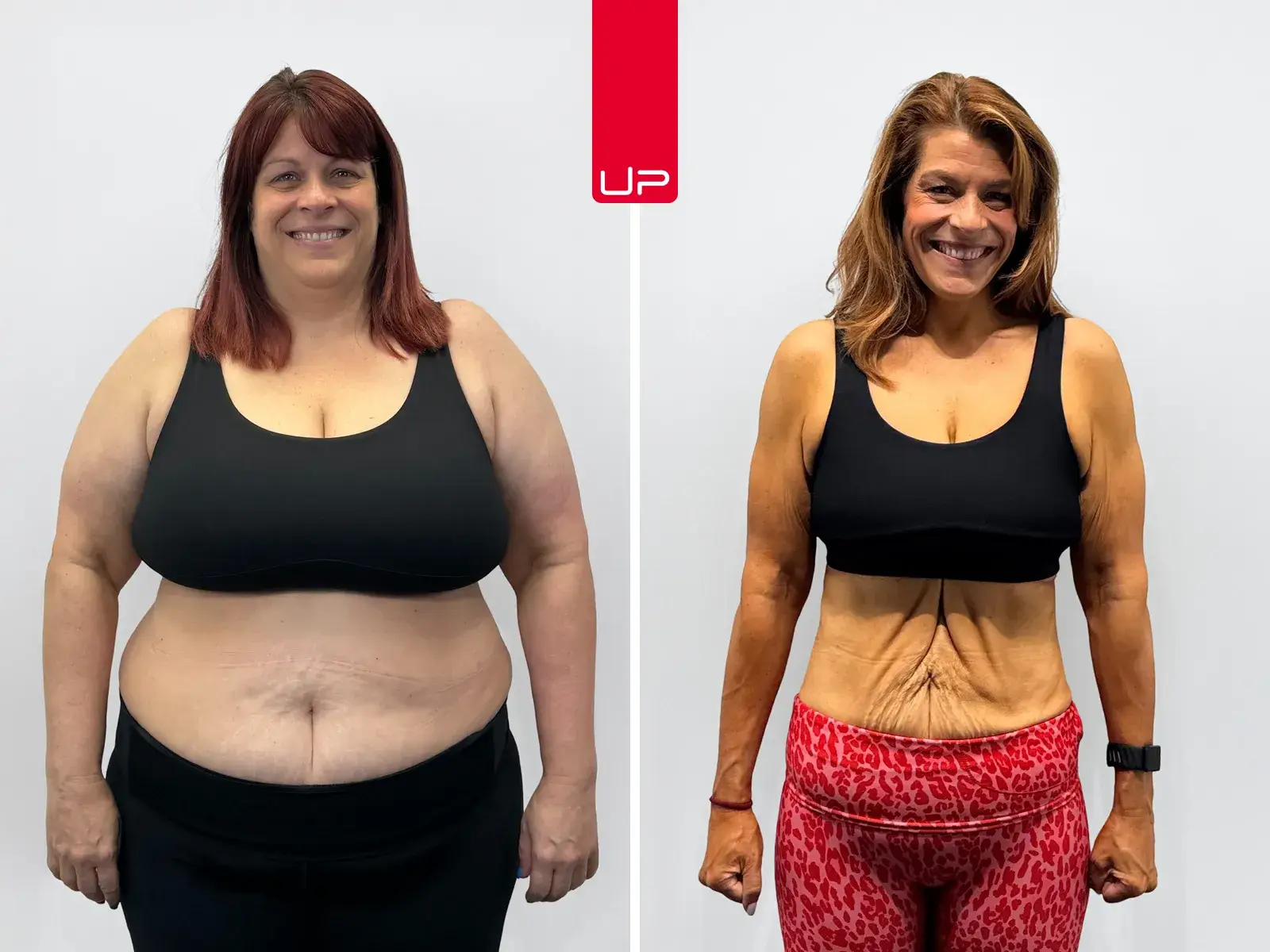
Karen Hit ‘Reset’ After Menopause at 55 – and Transformed Her Body with Strength Training
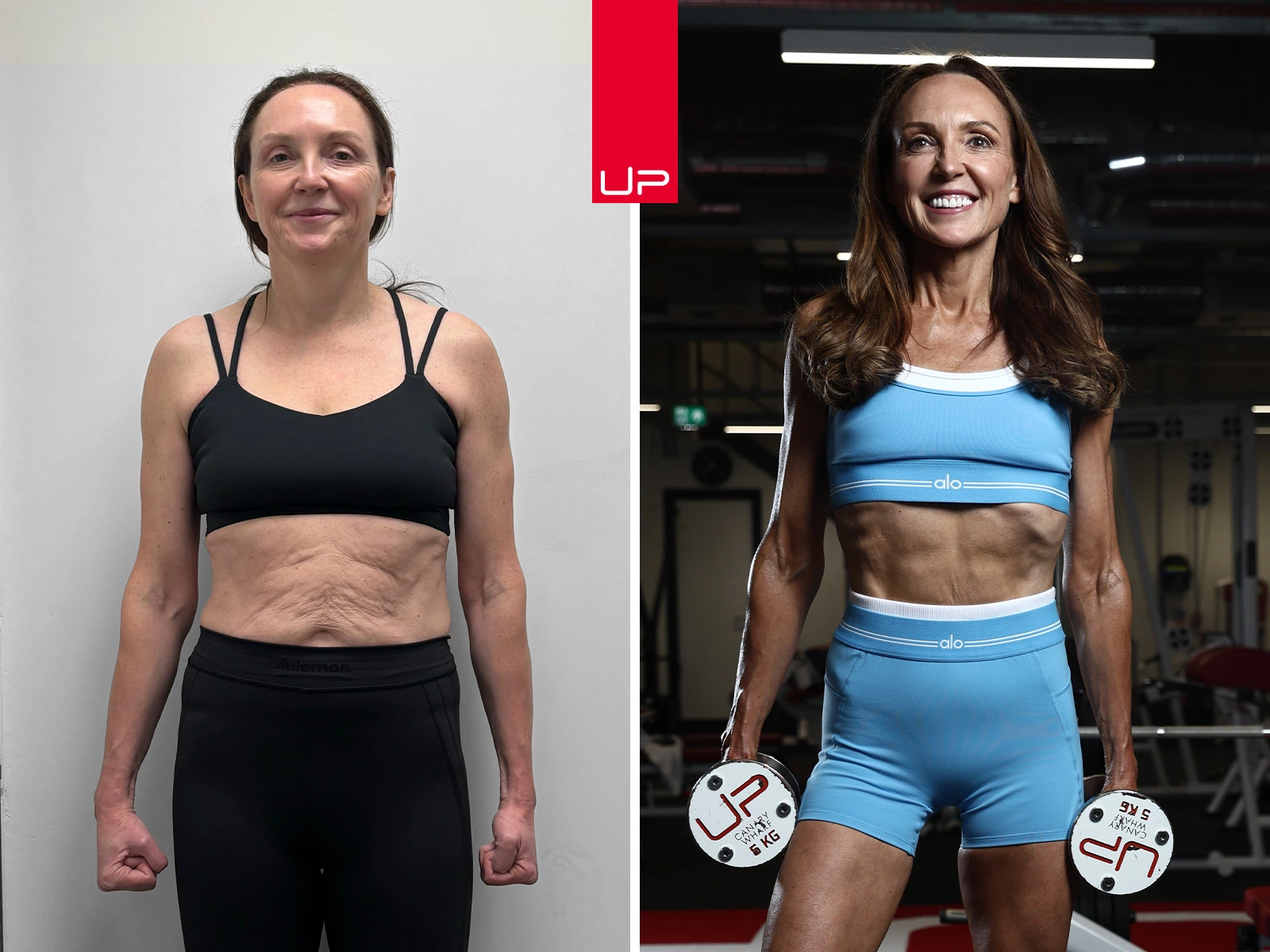
Menopause had left 55-year-old Karen feeling weaker and sluggish, with weight creeping on and a growing list of symptoms making her realise her body was changing.
With 60 suddenly on the horizon, she decided she wasn’t going to wait for things to get worse. She wanted to reset, build muscle and take control of how she approached the next stage of her life.
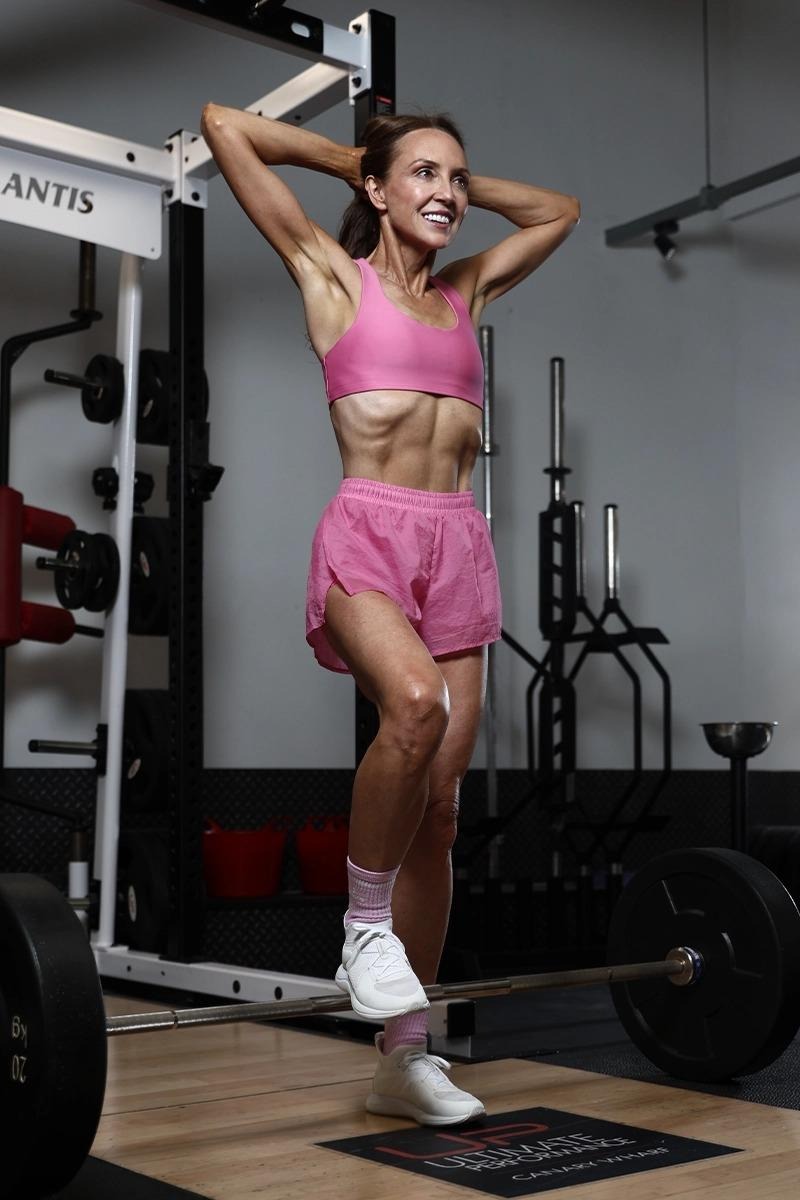
Working with her Ultimate Performance trainer, Karen lost 8kg (18lbs) and 13cm from her waist while building the strength she once doubted she was capable of.
But her biggest transformation has been in how she now sees ageing – not as a time to wind down, but as an opportunity to invest in herself, optimise her health and ask: ‘What’s the next thing?’
In her words, “I want to do something about it now rather than wait till I’m late 50s or 60. I want to build muscle, I want to really try again.”
Here’s how she did it…
Karen, you’d trained with U.P. before. What made you decide that at 55 it was time to come back and really reset?
I’ve had three stints with U.P. now – the current one has been the most successful.
Almost 10 years ago, I had done lots of research, and I’d seen a bit of media coverage on one of U.P.’s clients who had done an awesome transformation, and I just thought, ‘crikey! I wonder if I could achieve something like that?’
I went through a training programme, and really enjoyed it at U.P. Mayfair. It was more of a journey back then about lose as much weight as you can, get as slim as you can, and don’t lose that much muscle.
When I left, I had a really strong belief in the U.P. Methodology, and the approach that I truly believed in.
And then I got into my 50s and of course menopause hits. For most women, it is an assault on your body, on your mind. Anxiety kicks in, you don’t sleep as well, everything. By midsummer last year, I’d started to see this accumulative effect of menopause, so a little bit of weight gain, just feeling a bit weaker generally, conditions like my arthritis in my hands, symptoms like I was having thyroid issues, and just feeling really sluggish.
I had what was a semi-big birthday, 55, coming up in November. I thought, ‘crikey, the big birthday ahead is 60. I want to do something about it now rather than wait till I’m late 50s or 60. I want to build muscle. I want to really try again.’ And I thought ‘U.P. is the best in the market’.
You wanted to build muscle, but you weren’t sure whether you could. How do you feel about what you’ve achieved now?
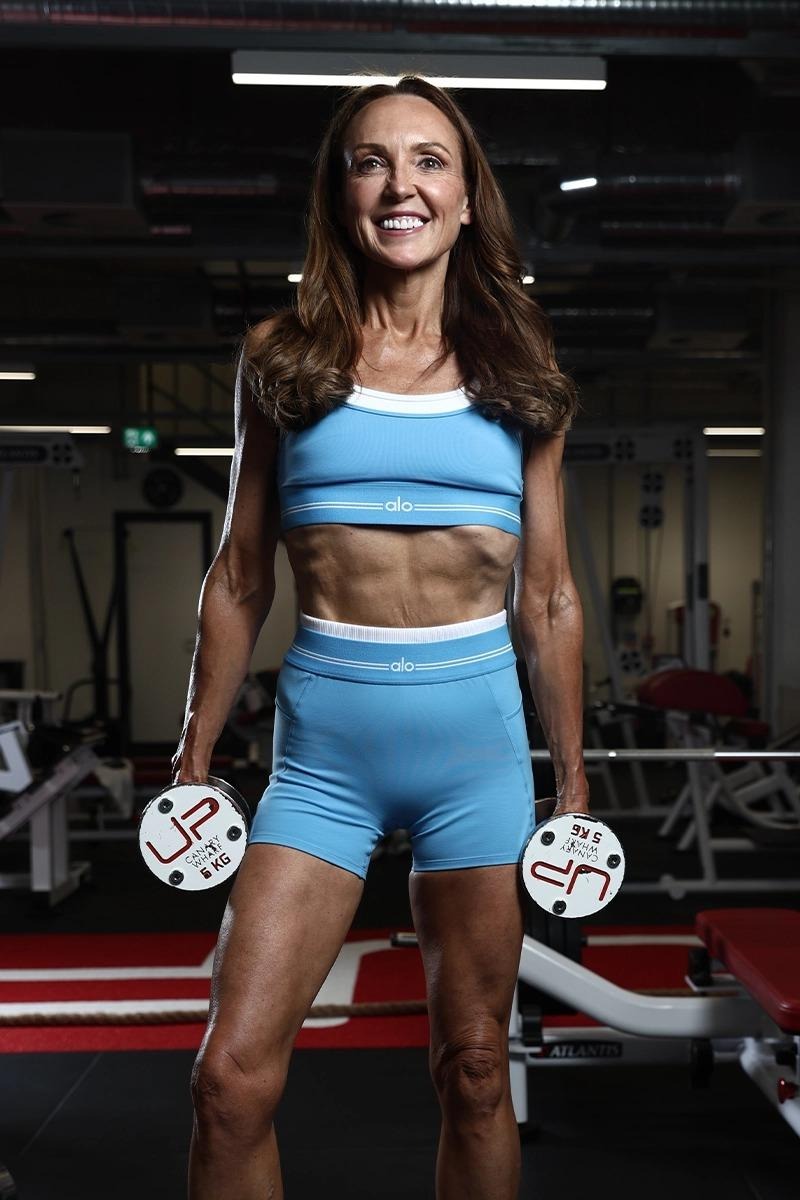
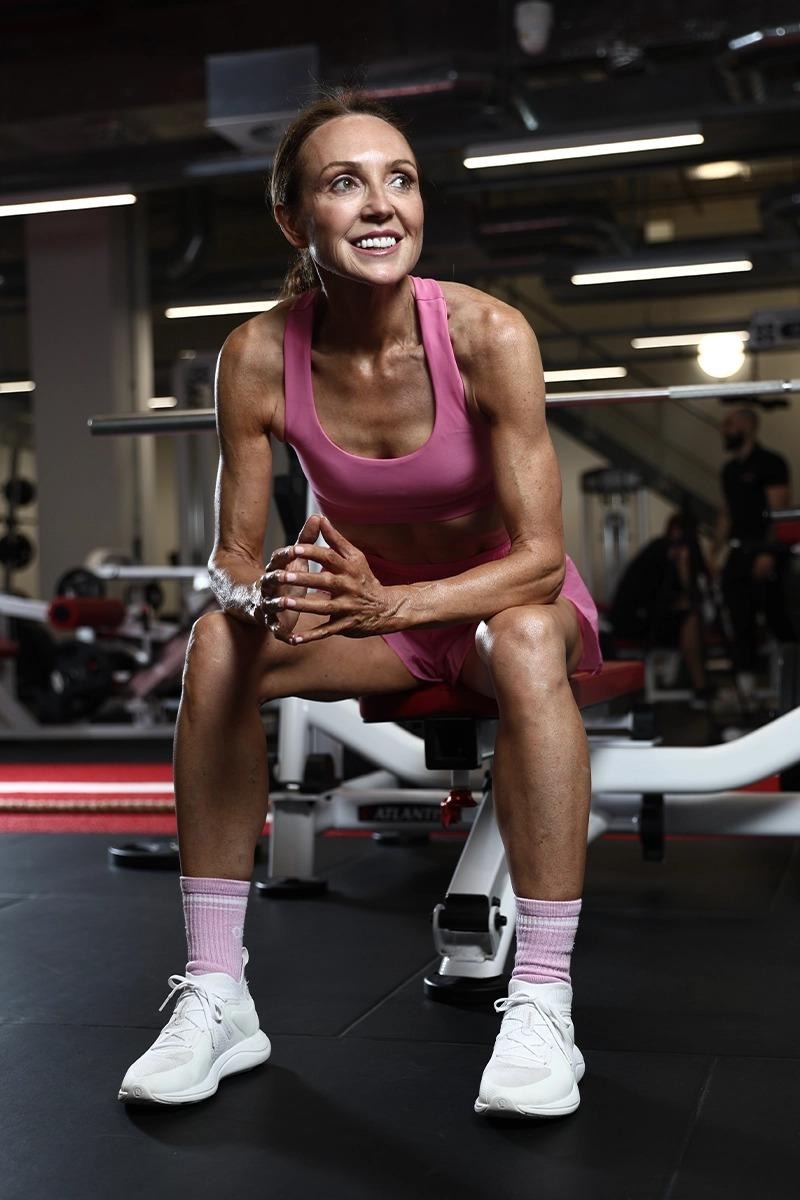
I actually feel ready to do the photoshoot. I think it’s a really nice point of celebrating what we’ve achieved and recognising I’m in the best possible shape that I could be.
Going into the photoshoot, I feel great. Mentally I feel great, physically I feel really strong. Some of the exercises we do are just insane. If I was in the gym and I was doing leg raises, I wouldn’t probably even do half the weight that we do. Pull-downs, rows, the same. I would never have thought that anywhere close to my body weight I would actually be able to pull, lift, and push.
We had a graduate recruitment day in my company yesterday and we have these ‘icebreakers’ where you talk about yourself and some interesting fact. When I started talking about the weightlifting and some of the things I’d achieved, people were like ‘That’s incredible!’
Even people in my team have commented on my transformation, which is nice. You feel like you’re inspiring others to see the potential and what they can achieve.
You’ve said this transformation became about much more than training. What else changed for you?
I don’t think it’s just the training element, but what’s really hit me is to train hard, you need to have other aspects of your life in sync.
So for me the diet had to be spot on. I’ve given up alcohol completely. I’m super focused on nutrition and sleep. And it's a combination of factors really that cut your inflammation, and help everything from the research that I've started doing on mitochondrial health, and around the whole spectrum of everything related to health.
And if I hadn't done the training, I don't think I would have made those other steps.
When we started training on January 6, I was still, like a lot of people my age, having a glass of wine here and there. Honestly, probably five nights a week.
Then we started training and the big difference I noticed instantly was how hard we worked. We weren’t just coming along and going through the programme and doing good training. We were doing exceptional training, and when I was leaving, I knew I had worked out.
To turn up and do that training in the morning, you’ve got to prepare the day before. Your nutrition’s got to be great, you’ve got to sleep. You’re definitely not going to have had a glass of wine or two because within those early sessions, I just thought, ‘Oh, I can’t give this my all.’
So by early February I’d completely given up alcohol, I’ve stuck to that. And then you see all the other things in life. All the blood markers have improved. So it’s a combination of factors, it’s not just one thing.
What have you learnt about nutrition through the process?
Before I was living probably quite a typical life of a lot of people. ‘What should we have for dinner tonight?’ Having what’s available on corporate lunches and dinners, and feeling social pressure as well to fit in and conform and eat whatever’s available or whatever everybody else is.
Now I don’t do any of that. I’m super strict on my macros. I have the same breakfast every day. It’s amazing. It’s got everything I need to start the day, and I feel fantastic for it. My meals, lunches and dinners, there’s a bit of rotation, but it’s not huge. And I hit the protein, make sure I’ve got enough fibre, great veggies, all the stuff that the body needs.
I’ve definitely got the mindset now through the education, through the coaching, through the tracking as well. Food and training is what our bodies need. We don’t need to coast through life just doing our jobs and doing what corporate life demands of us or family life. Look after ourselves first.
And what changed in the way you approached strength training?
Previously my brain would tell me three sets of 10 is enough, and a slightly challenging weight is probably going to do a world of good. But I know that’s not the case because you need the ‘progressive overload’ – you need to push yourself.
I remember my trainer say to me, ‘the last couple of reps – don’t underestimate how important they are.’ So even when I’m getting to where I think I’m getting fatigued, I’m like, ‘right, there’s one more, there’s three more.’
It’s been a huge education in terms of the theoretical learning, but the practical learning – and how the body works – and the mindset shift is the transformational bit going forward for me.
Did you believe at the beginning that you could achieve the physique you have now?
I’ve got a belief in myself when I set out to do something, and I strongly believed that U.P. could help me achieve my very best.
I guess I didn’t have a vision that I could ever really truly have abs that would show or that my arms would be defined. I couldn’t picture that. But I did believe that I would get in great shape, whatever that would look like, and I would be disciplined.
I believed in the U.P. approach, and I wanted to train with the best trainers.
What is different about the support you get from your trainer?
They operate really differently. My trainer would check in, and if I’ve got any concerns, I would just message him. We’re in touch a lot.
I truly feel that he’s as invested in this journey of mine as I am. That’s how I feel.
You have a demanding career. What would you say to other busy women in their 50s who struggle to find time for themselves?
I think key tips are just to invest in yourself – and it’s not just financial investment, it’s investing the time.
Because, actually, the energy you have, the strength, the mental strength and clarity that comes, whatever age you are, but particularly for women in their fifties going through what is a really challenging time of your body changing, to have something that you’re fully focused on just for yourself, to improve yourself, makes you better in every aspect of life.
It’s just about dedicating that time. An hour out of your day, three times a week, you can make up that time. Maybe I’m working three hours in the evening or I’ll catch up.
Obviously work time has to be made up, but I think that’s a worthwhile investment because actually I feel much more energetic, much more positive in life generally as well.
I think it is just investing time and energy in yourself to do it.
Has that investment in yourself changed how you perform at work too?
Day to day, work-wise I’m far more efficient because I’m more focused. If I’ve got to do more in less time, I’m using ways to be more efficient.
I’ve got a reasonably large team, and there’s about 50 people on the team, and everyone will take your time from you. I don’t mean that in a kind of selfish way, but actually three hours out of your week is nothing, in a working week, to be less available for three hours.
Having less time at the laptop in the working hours to serve other people in my team has actually made me far more efficient.
Finally, has going through this reset changed how you think about getting older?
I think in life in general I’m probably a bit more target focused as well, because with the training we’ve been very target focused.
Even now I’m thinking, ‘right, what do I want to achieve?’ I’m not sort of letting the years drift by. I’m thinking, right, what do I want to achieve now? What’s the next thing? What’s the next step? Which I actually like because it gives you a much more positive mindset.
If I reflect on my uni friends, I actually feel sometimes there’s quite a big age difference between us in terms of outlook on life. There’s a few of my friends who are obviously exactly the same age, but they’re on this ‘wind down’, and I mean wind down in terms of they see retirement and slowing down as their direction.
Whereas I don’t see that at all. I’m like, ‘what’s the next stage in terms of fitness, health, health optimisation?’ There’s a load of buzz around longevity, wellness, etc., but I’m really focused on that, and I think that’s empowering, isn’t it? So the gym and the training is all part of that.
Ready to turn your life around, like Karen? ENQUIRE NOW
.webp)