

Christmas is a wonderful time for fun, families and togetherness.
It can also be a time for indulgence with food, drink and festivities where fitness goals are set aside until the New Year.
Christmas weight gain can be a worry for many people who struggle to lose the excess after the holiday season. But you can still enjoy Christmas and keep your fitness and health goals on track.
We will show you how in our Ultimate Guide to Surviving Christmas:
- How to manage your diet and eat healthily.
- Tips for eating well on Christmas Day.
- How to exercise and stay active.
- Workouts you can do at home over Christmas.
- Healthy Christmas recipes that support your fitness goals.
- How to support good mental health.
- How to lose weight and get back on track after Christmas.
How much weight does the average person gain over Christmas?
While estimates of average holiday weight gain range anywhere between 1kg to 4kg, research indicates that, for the average person, the scale typically increases by 0.37kg, far less than most stats you'll read in the news(i).
However, while the data surrounding weight gain may not be quite as doom-laden as previously thought, that doesn't mean that most people are any more effective at losing the excess weight after the holiday period.
In fact, the evidence suggests that adults tend to weigh more in February and March than in the previous September, and this weight often does not decrease by the following September(ii).
The problem is that adults often gain weight through the festive season, fail to lose it in the following period. This compounding weight gain over the years is what often causes people to become overweight or obese.
How quickly can you lose Christmas weight?
The speed with which you can lose Christmas weight depends on how much you eat, how active you are and how much you have to lose in total.
Of course, the more you eat and the less active you become, the more body fat you are likely to store. So, if you spend a month eating like there's a famine on the way, unsurprisingly, you'll end up carrying some extra weight.
A drop of 1% of your total body weight per week is a good target when it comes to losing fat. However, 1kg may represent a bigger or smaller proportion of your weight, depending on your weight and body composition.
It's worth noting that your body composition before Christmas matters too. If you achieve a healthy body composition (between 10-15% body fat for males and anywhere between 15-20% for women), gaining 1kg is unlikely to present a significant health risk and is relatively easy to reverse through dietary and nutrition changes.
However, the more overweight you become, the greater the health risks (e.g. type 2 diabetes, hypertension, high cholesterol) and the harder and longer you need to diet. As a result, it's generally better to avoid reaching this point in the first place.
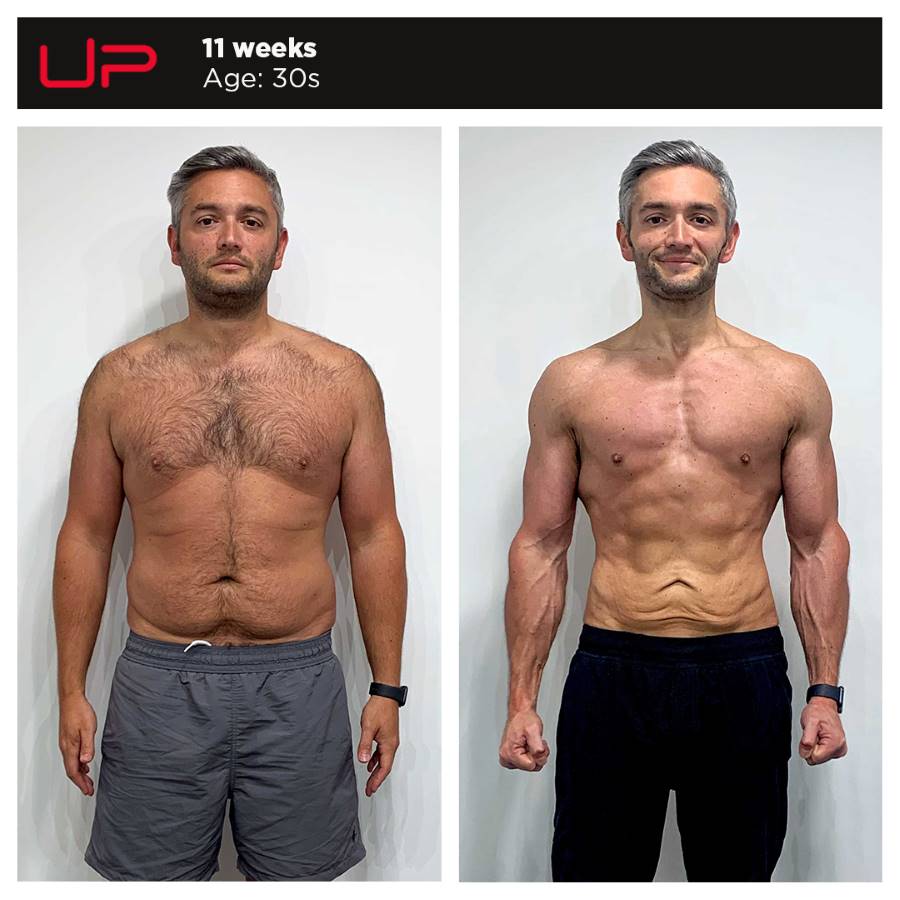
Nick completed his 11-week 21kg transformation to be in the best shape possible for Christmas.
Managing your diet through the Christmas party season
Christmas is a time when many people can find their discipline and consistency with nutrition wane. An abundance of high-calorie tasty foods and lots of peer pressure can quickly lead to overindulgence with festive food and drink.
Part of the problem is that people often adopt an all-or-nothing mindset that results in them 'falling off the wagon'. In fact, this 'screw it!' mentality frequently holds people back from achieving their health and fitness goals(iii).
However, you don't need to say 'no' to everything. Instead, the main aim around the festive period should be to enjoy everything in moderation. Don't worry if you do not know where to start – check out the nutrition tips below so you can enjoy your Christmas without completely going off track.
1. Start with a good breakfast
Instead of the usual processed cereals or toast and jam, start your day with a high-protein breakfast and healthy fats to set the tone for the rest of the day.
Try not to skip breakfast altogether to save calories, as this can affect your blood sugar, energy and mood, leaving you feeling ravenous and more likely to overeat later!
Instead, go for options such as spinach and tomato omelette, or poached eggs and avocado. These kinds of breakfasts keep you feeling fuller for longer, provide a good dose of vitamins and minerals, and help stabilise your blood sugar levels throughout the day.
2. Watch your liquid calories
The festive period is when many people like to relax and enjoy a drink. However, you can have too much of a good thing, and it is important to choose your drinks wisely.
Festive favourites such as eggnog, mulled wine and creamy liqueurs are high in calories and are easy to overconsume.
Alcohol, in particular, contributes empty calories which have little to no nutritional value and can contribute to making poorer food choices throughout the day.
If you do choose to drink, do so in moderation and ensure you are counteracting with plenty of water throughout the day to stay hydrated.
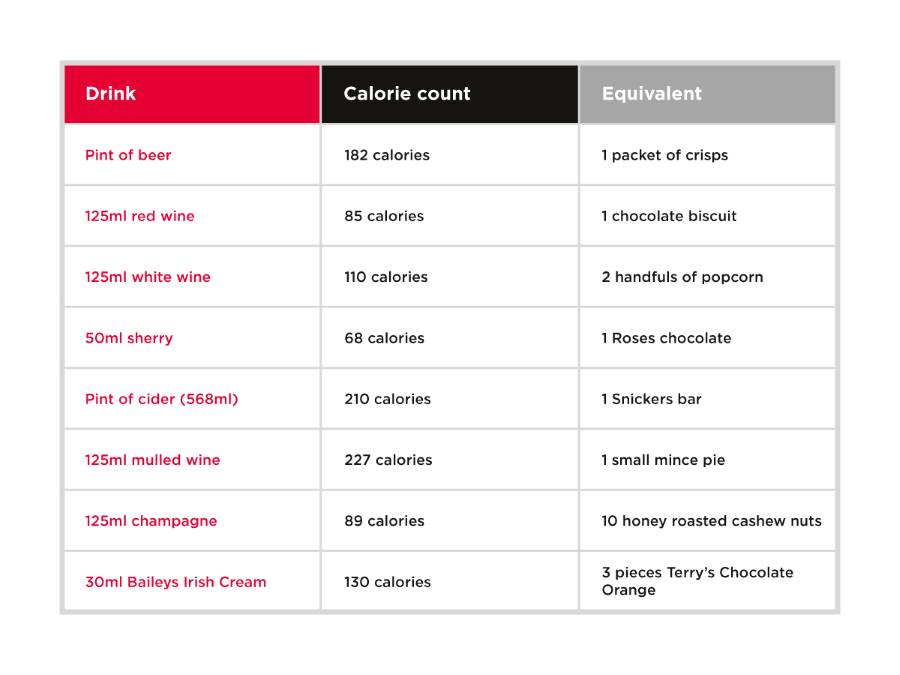
If you have to drink, choose your tipple wisely!
As you can see, not all drinks are made equal! To minimise the damage, go for spirits with a calorie-free mixer, a glass of prosecco, or half the alcohol content of a glass of wine by making a spritzer.
3. Focus on nutrient-dense foods
When it comes to Christmas dinner, instead of focusing on calories, aim to maximise nutrient density.
There are plenty of small changes you can make to your Christmas dinner without sacrificing taste or enjoyment.
Ensuring most of your plate is filled with lots of vegetables, a serving of lean protein and keeping the trimmings, such as stuffing or gravy, to a moderate amount will help you tick all the nutritional boxes.
We've got a host of nutrient-dense Christmas swaps that won't break the calorie bank!
4. Visit people, not food
Christmas is a time to socialise and spend time with your nearest and dearest, so make that the focus of your day rather than the food.
Whatever you choose, make it a part of the social occasion you share with friends and family rather than overindulging alone or eating mindlessly in front of the TV.
Christmas food is meant to be shared and enjoyed together socially rather than eaten alone!

5. Eat until satisfied, not stuffed
Christmas is a day to eat what you enjoy, but don't confuse this with 'eat everything and anything in sight'.
Nobody likes that overly full and sick feeling when you eat to excess just because something is there, rather than needing it.
Instead of eating for the sake of it, focus on quality, not quantity.
6. Remove the guilt
Although it's important to be mindful, remember that you can sit back, relax and enjoy your time with friends and family and, if you do overindulge, don't beat yourself up.
Do not overly restrict and deprive yourself for the next week to compensate, as this will only encourage and lead to bad habits long term.
Instead, shift your focus to getting back to your normal eating and exercise routine.

Keep your healthy habits in place over Christmas, such as daily activity outdoors.
7. Indulge only in festive foods
It's one thing eating a little too much Christmas pudding, but another if you're following it up with a trip to McDonald's. The key with this time of year is to set realistic dietary goals.
Unless you have an impending photoshoot deadline in January, totally restraining yourself from some treats will only lead to you cracking and inevitably bingeing.
But select your treats wisely and pick foods only available in the holiday season rather than those that are readily available the rest of the year.
Of course, you still need to exercise a little portion control!
8. Use a few key strategies to beat cravings
Amino acids such as glycine and glutamine can help curb sweet cravings and balance blood sugar levels. Other tips for beating cravings include brushing your teeth, which should quickly stop your cravings in their tracks. If that still doesn't work, get moving! A walk or run will soon help curb any persistent cravings.

Staying active during the holidays
Christmas is the time in the year where people relax, eat and drink more, and exercise goes out the window.
But there's one simple way to stay healthy, maintain your body weight and put yourself in the best position to kick off the New Year; that's increasing your daily activity levels.
Although finding ways to exercise during the festive season can be challenging, it is not impossible.
Here are five tips we use with our clients to help them stay fit and healthy over the festive period.
1. Do something rather than nothing
Your routine may be different at Christmas, and you might be more limited for time than usual. However, your mindset should be to look at what you can do and start from there, rather than throwing the towel in and doing nothing at all.
Even if it is just a 20-minute workout or a walk outside, always look to get your body moving in some way every day to increase your daily energy expenditure and lift your mood.
2. Get outside
Going to the gym might not always be an option, especially with Christmas shopping or a busy social schedule.
Getting outside for a walk, run or cycle will increase your energy expenditure and provide some much-needed sunlight exposure for a daily dose of Vitamin D.
Aim to get out first thing in the morning before your day gets too busy, and your motivation is still high. Not only does this put you on a positive note for the day, but daylight exposure before noon also helps to regulate your circadian rhythm, thereby promoting better sleep.

3. Get the family involved
If you have a big family or energetic children, get them involved too! Including your friends and family is a great way to stay accountable during the festive period and keep more active generally.
Group activities are a great way to spend time with loved ones and get all the benefits of exercise. Turn off the TV and video games and schedule group activities like hiking, ice skating, football or cycling.
4. If you can't get to the gym, fit in a home workout
If you can't stick to your normal training routine due to time constraints and family obligations, why not try a home workout.
A 30-45-minute high-intensity session at home can be easier to pack into a busy schedule than going to the gym. It is also a great way to increase your energy expenditure, boost endorphins. It also costs nothing!
Get creative with household items, like water bottles, tins of food or rucksacks full of books to add resistance and make your workouts more challenging. Alternatively, check out one of the workouts below with Elliott Upton, our Head of Online Personal Training.
Whatever your equipment, we've got you covered!
5. Don't wait for New Year
How many people do you know that say they want a fresh start come January 1, but why wait? Implementing better habits now will set you up for long-term success.
Small changes you can stick to consistently over time will make the biggest difference.
So, enjoy the festive period but stay active, keep up healthy habits, and you'll have a head start on your goals in the process.
This approach will leave you in a far healthier and happier position to push on to your New Year fitness goals.

Mouth-watering recipes that won't break the Christmas calorie bank
If you're in charge of cooking and don't want to overdo the indulgence, try these festive recipes for the ultimate healthy festive dinner:
- Tasty stuffed chicken thighs
- Christmas leftover turkey paleo pie
- Low-fat pigs in blankets
- Fat-loss friendly maple bacon sprouts
- Butternut and chestnut Christmas recipe
- Christmas trimmings
- Paleo chocolate orange squidgies
We've made some simple swaps to keep things clean and put a twist on some classics. If you're plant-based, we've got something for you too.
Yuletide mains
TASTY STUFFED CHICKEN THIGHS RECIPE
Whether it's Christmas dinner or the Boxing Day buffet, there's always a selection of appetisers, sides and finger food to fill your belly during the festive season.
To avoid piling on the pounds and undoing all your hard work, try sticking to foods that you normally eat as part of your diet.
Protein and vegetables will give you the biggest bang-for-your-buck, so have a go at making this clean-eating festive option that everyone will love.
This recipe uses our healthy quinoa and mushroom stuffing recipe, which you can find below.
Once you've made your stuffing, follow these instructions, and you'll have a delicious high protein menu option that comes with all the essential amino acids. Winner winner, chicken dinner!
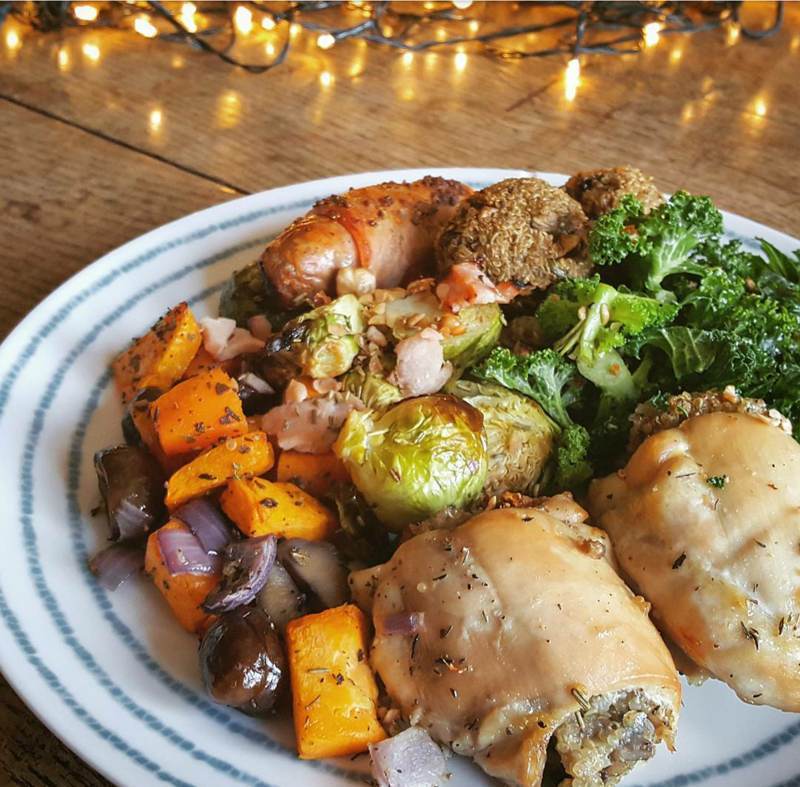
Macros
Serves: 3
Calories per serving: 398
Carbs: 12g
Fat: 18g
Protein: 47g
Ingredients:
- 200g mushroom and quinoa stuffing mix (roughly one batch)
- 6 free-range chicken thighs – skinless and boneless
- Juice of half an orange
- 1 tbsp thyme – freshly picked or dried
- ½ tsp black pepper
- Pinch of Himalayan salt
Method:
- Open up the chicken thigh and line with a heaped tablespoon of the stuffing mix.
- Fold the chicken thigh back over.
- Pour over the orange juice and sprinkle over the thyme.
- Season and roast in the oven at 170°C for 25 minutes. Check the chicken is cooked through and piping hot in the middle – the stuffing can increase the cooking time depending on how generous you've been.
- Remove from oven and serve with roasted butternut squash and steamed kale.
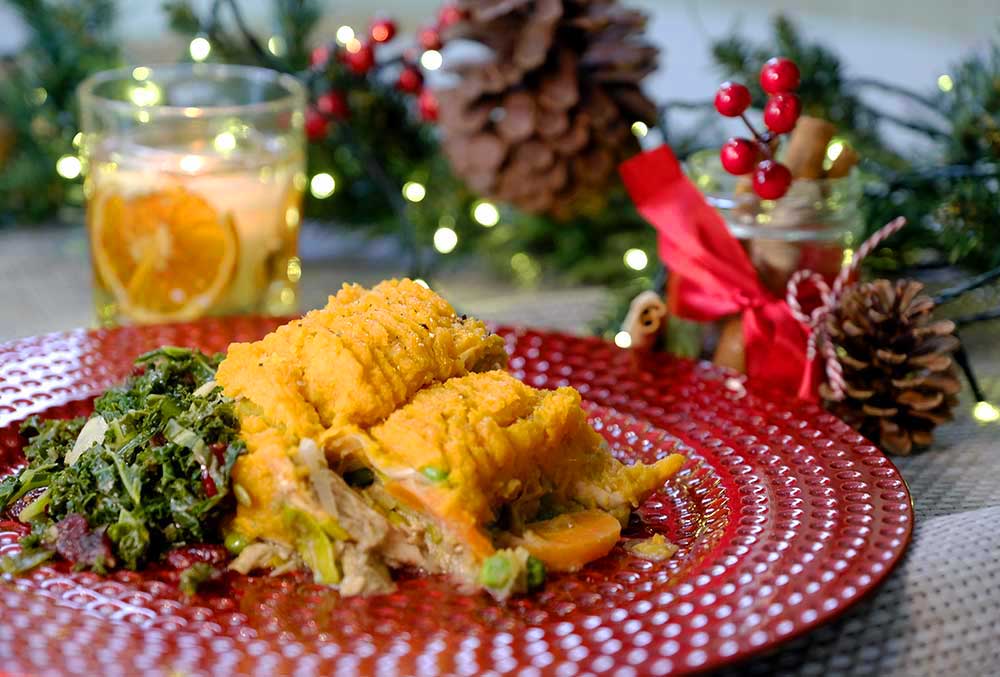
CHRISTMAS LEFTOVER TURKEY PALEO PIE
It's Boxing Day, you've overindulged the day before, and you have tons of leftover turkey.
Are you sick of chocolate and sweets? Craving something nutritious and healthy? This paleo turkey pie will help you balance out all the treats from the last few days. Filled with nutrient-dense vegetables, low-fat turkey and topped with creamy mash, this dish will be a firm favourite with all the family.
So whether you have friends around for a Boxing Day dinner, a quiet one with family or just need an inventive way to use up all that extra turkey, give this paleo pie a go!
Ingredients
- 450g turkey
- 2 carrots
- 1 leek
- 1 onion
- 3 cloves of garlic
- 250g mushrooms
- 1 cup of broccoli
- 4 sweet potatoes
- 1 cup of stock
- 1 tsp dried rosemary
- 1 tsp dried thyme
- 1 tsp butter
- 1 cup of coconut milk
Method
- Peel and chop the potatoes into cubes and place them in a pan of boiling water. Leave to boil for 25-30 minutes.
- Meanwhile, finely chop the garlic, onion and mushrooms.
- Add a dash of olive oil to a frying pan. Add the onions and garlic and leave to fry for 3-4 minutes or until the onions are translucent.
- Add the mushrooms with a sprinkle of rosemary and thyme and leave to brown for another 3-4 minutes.
- When the mushrooms are cooked, add the mixture to a blender with half a cup of coconut milk. Blitz and set aside for later – this will be your creamy sauce.
- Slice the leeks, carrots and break up the broccoli florets. Add to a pan with a little olive oil and leave to cook.
- Meanwhile, add a teaspoon of butter and some black pepper to the drained potatoes and mash.
- Add the leftover turkey to the vegetables along with the rest of the thyme and rosemary and stir.
- Next, pour in your creamy sauce and add the peas. Stir and leave to simmer for 10-15 minutes.
- Spoon the turkey mixture into a pie dish and top with your mashed potatoes.
- Put the pie in a pre-heated oven (gas mark 7/220°C/200°C fan) for 20 minutes.
- Serve with some spinach and enjoy!
Festive side dishes
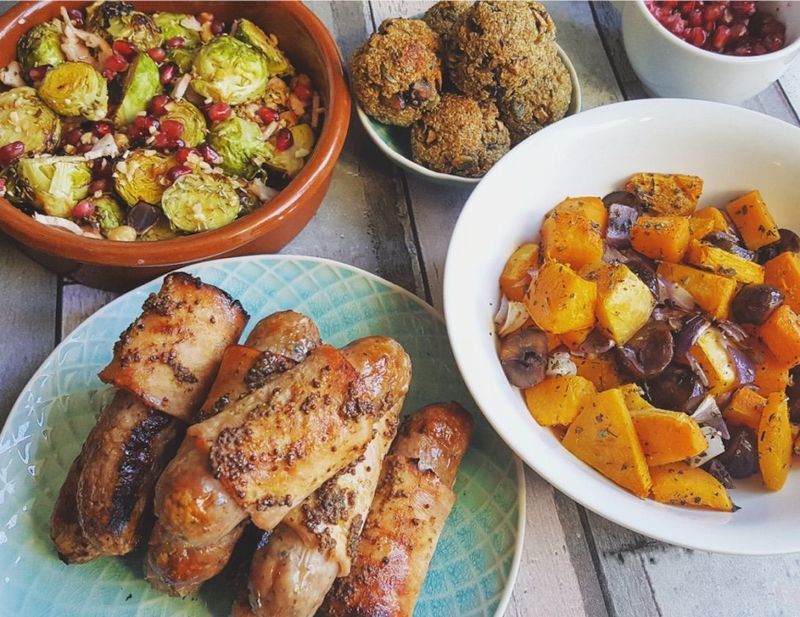
LOW-FAT PIGS IN BLANKETS RECIPE
Pigs in blankets are the ultimate Christmas comfort food.
Switch up your regular, high-fat pork sausages with these turkey sausages and turkey bacon rashers, and you're in for a healthy, high-protein treat!
Making simple, healthy changes to your festive dinner all amount to a healthier Christmas without a lot of extra effort.
You can customise this recipe with different flavours. We've used wholegrain mustard and a drizzle of honey, but you could add some sliced apple or even wrap your sausages with our quinoa and mushroom stuffing.
The main healthy switch here is from pork to turkey. Turkey is a great source of iron, zinc and vitamin B6, which is great for your energy levels. It is lower in fat than pork and very high in protein. Turkey is also a source of selenium and tryptophan (an amino acid), which is key to producing serotonin (your happy neurotransmitter).
Macros
Calories per pig in blanket: 122
Carbs: 6.9g
Fat: 3.3g
Protein: 16.1g
Ingredients:
- 8 gluten-free turkey sausages
- 8 rashers of turkey bacon
- 1 tbsp wholegrain mustard
- 1 tbsp raw honey
- ½ tsp rosemary
Method:
- Spread out your sausages in a baking tray.
- Mix the mustard, honey and rosemary in a small bowl.
- Baste the sausages with the marinade.
- Wrap a slice of bacon around the sausage.
- Baste again and bake in a pre-heated oven at 180°C for 20-25 minutes until the sausages are cooked through.
FAT LOSS-FRIENDLY MAPLE BACON SPROUTS
Love them or loathe them, these Christmas staples are packed full of vitamins and provide a great source of fibre.
Loaded with vitamin C, vitamin K, fibre and antioxidants, these green vegetables also provide a boost to your immune system.
Most sprout recipes feature smoked, streaky bacon that is high in saturated fat. However, this recipe uses turkey bacon, which brings


