


If your goal is to burn fat, lose weight or build muscle, then putting your exercise regime on hold for the entire month of Ramadan can set you back a long way with your goals.
The fasting period during the Holy Month means refraining from consuming food and drink in the long hours from dawn until sunset. However, Ramadan doesn't mean you have to put your fat loss or muscle building goals on hold.
Such long hours without food or water can put a large amount of stress on your body – but with some careful planning and smart training advice, you can still lose weight or grow muscle during Ramadan safely and effectively.
This complete guide to fat loss, diet and training during Ramadan will show you:
- How to workout during Ramadan
- What is the best cardio for fat loss
- How to plan your diet
- How to create a meal plan for your goals
- Which supplements are best for your health
Here are our top tips and advice on navigating your way through Ramadan to help ensure your health and fitness goals can still be achieved.
Contents
Jump to a section:
- Fat loss during Ramadan
- Weight maintenance vs weight loss
- Mental and emotional well-being
- Can you work out during Ramadan?
- When is the best time to work out during Ramadan?
- How long should you work out during Ramadan?
- Should I do cardio during Ramadan?
- Increasing NEAT (non-exercise activity thermogenesis)
- Practical tips for training and fat loss during Ramadan
- Hydration and electrolyte strategies for training while fasting
- How should you eat during Ramadan?
- Practical timeline
- How to manage your sleep during Ramadan
- The role of sleep in muscle retention and fat loss
- How supplementation can help when fasting
- FAQs: Ramadan training and nutrition
- Long-term vs short-term goals
- Post-Ramadan strategy
- Key takeaways
Fat loss during Ramadan
If you want to burn fat or lose weight during Ramadan, the normal fat loss principles apply.
Creating a consistent calorie deficit (expending more calories than you consume in a day) is key when it comes to fat loss.
The best way to achieve this is through a combination of eating less and increasing your exercise and daily activity levels.
Resistance training, in particular, is important to help preserve your muscle and strength.
However, it is worth noting that research on Ramadan fasting – which is a form of time-restricted feeding – has shown that body weight and body fat tend to drop over the 4-week fasting period when individuals continue training and manage their nutrition properly (1,2,3). Studies indicate that lean body mass (muscle) is largely preserved, provided you maintain an exercise routine and adequate protein intake (4). So, as long as you create a moderate calorie deficit and keep lifting weights, your body composition can actually improve throughout Ramadan.

Weight maintenance vs weight loss
Not everyone aims to lose weight during Ramadan. Some may be at a healthy weight or prefer to focus purely on spiritual goals and muscle preservation. If that is you:
- Eat at maintenance: Calculate or estimate your maintenance calories. Ensure enough protein and balanced macros to preserve muscle.
- Do not fear healthy fats: They help with hormone regulation and satiety. Include avocados, nuts, seeds or olive oil in moderation.
- Monitor weight: Weigh yourself or track body measurements once or twice weekly to ensure you are not dropping too low or creeping into surplus.
- Still train: A maintenance phase is perfect for maintaining or slightly increasing strength, focusing on good technique, and preventing muscle loss.
Mental and emotional well-being
Fasting can be a challenge psychologically, not just physically. The disruption to your normal eating and sleeping patterns can increase stress and fatigue. During Ramadan, you may also have additional spiritual or social commitments. It is crucial to recognise the mental and emotional aspects of fasting and training:
- Set realistic expectations: You may not always feel 100% when training. Accepting that this month is about maintaining your fitness (or making modest progress) can reduce stress.
- Practise mindful eating: Focusing on the why behind fasting – spirituality, self-improvement, and empathy for those less fortunate – can strengthen your resolve and help you avoid mindless bingeing at Iftar.
- Stress management: Consider techniques like short meditation, deep breathing exercises or journalling before bed. These can alleviate mental fatigue and support better sleep.
- Link spiritual benefits to exercise: If you see your workouts as part of self-care and maintaining the body as an amanah (trust), it can boost motivation and mental focus during Ramadan workouts.
Can you work out during Ramadan?
If you are thinking about training or doing a workout during the month of Ramadan, the secret is to 'stimulate, not annihilate'.
It's important to take a more measured approach to your training while fasting – and that's something we do with all our personal training clients at Ultimate Performance.
You shouldn't be trying to hit your personal best lifts or starting a new high-intensity weight training regime (unless you're truly feeling fit and strong after the fast).
It's always advisable to use Ramadan as a period to maintain your fitness levels rather than drilling yourself into the ground.
Plan workouts that include effective whole-body weight training three sessions a week. This is a great approach to deal with the stress of fasting while still maintaining strength and muscle.
Research suggests that while some aerobic performance markers (like endurance) can dip during Ramadan, strength and power are generally well maintained if you stay hydrated (outside fasting hours) and continue lifting (2,5,6). Scheduling your training sessions for times when you can fuel and rehydrate soon after (for example, after Iftar) can help you retain muscle and possibly even make modest strength gains (7).
When is the best time to workout during Ramadan?
Training early in the morning is best during Ramadan after your first meal of the day. If this doesn't work with your schedule, then hit the gym after your first main meal, after Iftar, so your body is well fuelled and has the right nutrients for optimal recovery.
Evidence shows that training in a 'fed' state, especially for resistance workouts, can help preserve muscle and maintain higher performance levels than training while fully fasted in the late afternoon (2,7). Try to avoid scheduling intense workouts in the late afternoon when your body has gone many hours without water, as dehydration can impair both strength and endurance. We always advise clients to avoid over-eating during Iftar – instead go for a smaller meal and good hydration if you plan to work out afterwards. Then go for another meal after training.
How long should you workout during Ramadan?
Don't feel you have to spend hours in the gym for an effective workout session. You can get a lot done in 45 minutes if you train hard and with intensity.
If your long-term goal is building muscle, an option during Ramadan could be to lower the load and add more sets to help maintain muscle mass. The key is quality over quantity: keep your workouts short and effective, focusing on compound exercises (like squats, presses, rows and deadlifts) to stimulate the most muscle in the least amount of time (8).

Should I do cardio during Ramadan?
While weight training should be the cornerstone of any fat loss plan for both men and women, cardio can also play an important role in creating the energy deficit needed to lose weight.
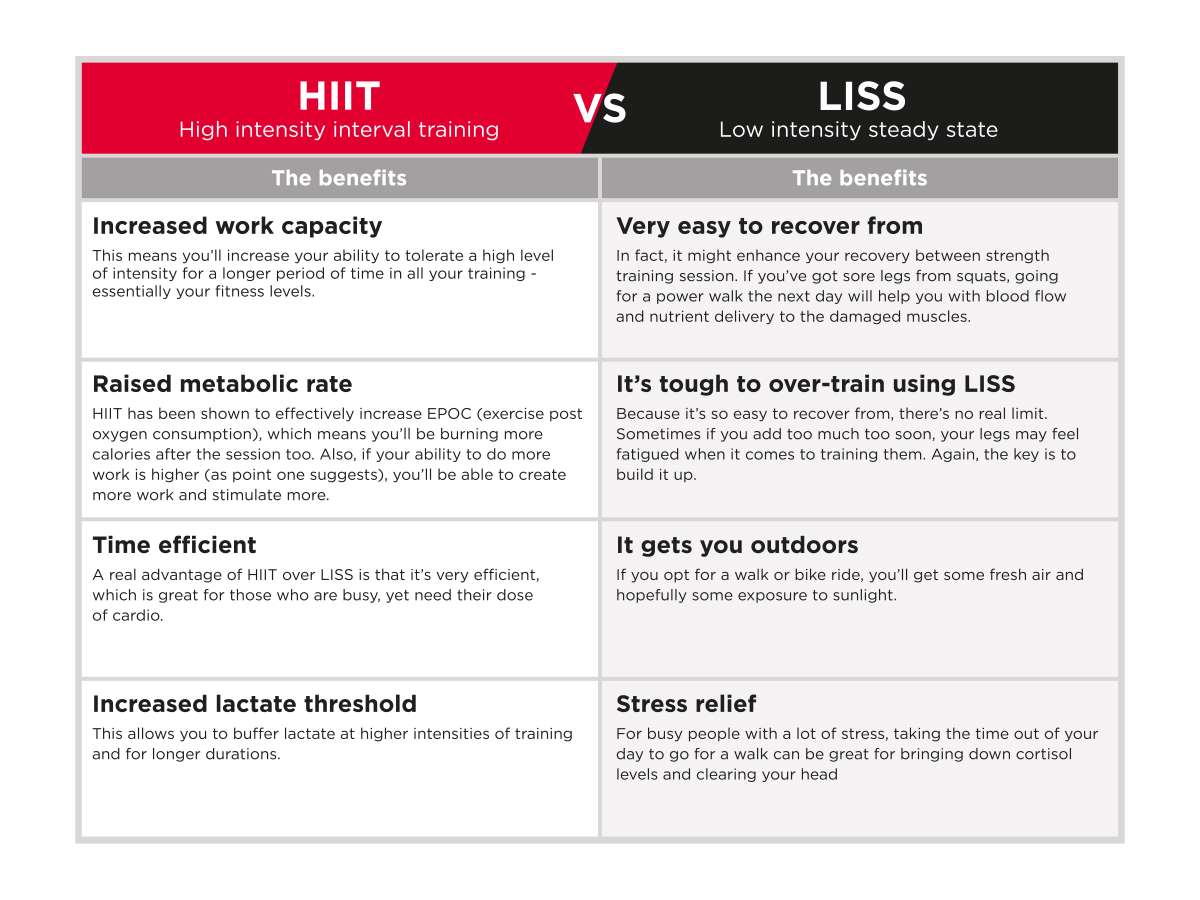
There are two key types of cardio that you can consider during Ramadan which will help you burn fat optimally – high-intensity interval training (HIIT) and low-intensity steady state (LISS).
Is High Intensity Interval Training (HIIT) best for fat loss during Ramadan?
HIIT will give you the most 'bang for your buck' for fat loss as it's fast, efficient and effective. Focus on quick bursts of 10-30 second maximum effort followed by 40-120 seconds of rest on a treadmill, watt bike, rower, sleds, prowlers, or just by sprinting outside. It is important to choose something you enjoy.
Although HIIT is highly effective for fat loss if done correctly, it is also very taxing on the body and tough on your recovery. During Ramadan, this is something to consider when your body is already under stress from fasting. So it may not be advisable to start a new HIIT programme during Ramadan if you've never done it before.
Is Low Intensity Interval Training (LISS) best for fat loss during Ramadan?
On the other hand, LISS is gentle and low intensity and could be a great fat loss tool for men and women fasting throughout the holy month.
The main benefit of LISS is that it's very easy to recover from and can actually improve your recovery from strength training. It can be as simple as going for a walk, swim or bike ride at a gentle pace that will only slightly raise your heart rate. It doesn't stress the body like HIIT, which is important during Ramadan; in fact, it can help de-stress if you're going for a walk outside.
Whatever form of cardio you do will depend on your individual preference, goal, exercise history and lifestyle. It's always advisable to consult a professional personal trainer for the right training programme for your individual needs.
Increasing NEAT (non-exercise activity thermogenesis)
If you are not doing formal cardio workouts during Ramadan, but you still have a fat loss goal, it is important to stay active throughout the day.
The activity you do outside of the gym is just as important as what you do inside the gym for increasing your energy expenditure and burning fat.
You can increase your daily activity and calorie burn in many ways, including walking upstairs, walking for the train, having a standing desk, cleaning the house, doing chores or playing with the children.
These all fall under the bracket of NEAT, which relates to all other daily activities which burn calories.
The best way to track your activity levels is to get a step counter app on your smartphone fitness watch or buy a cheap pedometer to measure your steps.
A good base target to aim for every day is 10,000 steps which will boost your weight loss efforts without adding any more stress to your system.
Practical tips for training and fat loss during Ramadan
Combining the scientific findings and insights from successful Ramadan programmes, here are key practical strategies to help you lose fat and retain muscle through the holy month:
- Plan workouts at optimal times
Whenever possible, schedule your training when you are best fuelled or can refuel soon after. Two ideal windows are early morning (after Suhur) or evening (after Iftar) (8). Early morning workouts let you utilise the pre-dawn meal's energy and you will have the whole day to recover (just be sure to rehydrate well at Suhur). Evening sessions, shortly after breaking the fast, are popular because you can eat and drink before and after exercise, minimising any performance drop-off (8). - Prioritise strength training (but stimulate, not annihilate)
Resistance training is your best friend for maintaining muscle mass during Ramadan (8). Aim for about 2–4 strength sessions per week, depending on your experience. Many experts recommend a full-body workout 2–3 times weekly or an upper/lower split, focusing on the major compound exercises to get the most benefit in limited time (8). Keep the training intense but not excessive – the mantra is "stimulate, not annihilate." This means using challenging weights to keep your muscles engaged, but avoiding super-high volume or marathon sessions that could impair recovery while fasting (8). - Incorporate cardio wisely
Cardio can help with fat loss by increasing calorie expenditure, but you need to balance it with recovery. High-intensity interval training (HIIT) is very effective for burning fat, but it can be taxing when you are fasting (9). If you are already adapted to HIIT, you can include a couple of short HIIT sessions per week (for example, sprints or circuit training after Iftar). Otherwise, low-intensity steady-state (LISS) cardio – like brisk walking, easy cycling or swimming – is gentle on recovery and can even help de-stress (9). - Stay smart with nutrition (meal planning and protein)
When it comes to diet, the challenge is twofold – avoid overeating at night while still eating enough to fuel and preserve muscle. Track your intake, emphasise protein (1.6–1.8 g/kg body weight) and include plenty of fruits and vegetables (9). Many people find a lighter Iftar, then a second small meal later in the evening, plus a proper Suhur, works well. Meal prepping or at least deciding portions beforehand reduces impulse choices. And remember to get your fruits and vegetables in – they provide crucial micronutrients and electrolytes that keep you feeling your best. - Use supplements to fill gaps
While whole foods should be the foundation, a few supplements are helpful when your eating window is short. Whey protein is fast-digesting and helps reach protein needs (9). Electrolyte supplements ensure you are getting enough sodium, potassium and so on to stay hydrated (12). Magnesium may help with deeper sleep and relaxation. Digestive enzymes or probiotics can also support gut health if you are prone to bloating after large meals (9).
Hydration and electrolyte strategies for training while fasting
One of the biggest challenges in Ramadan is staying hydrated. Dehydration can sneak up on anyone fasting, since you go all day without fluids. Even a mild level of dehydration (about 2–3% loss of body weight in water) can start to impair physical performance (13). Strength, power and endurance all decline as you become more dehydrated, and it is also harder to burn fat efficiently when you are dehydrated (3).
Since you cannot drink during daylight, the goal is to maximise hydration in the hours between Iftar and Suhur. A few evidence-based strategies:
- Rehydrate aggressively after exercise or breaking fast: If you train shortly before Iftar, aim to drink ~1.5 times the fluid you lost in sweat once you can break your fast (4). This ensures you do not start the next day at a deficit.
- Prioritise electrolytes: Add a small amount of sodium to your water or consume an electrolyte solution. Sodium helps retain water and boosts rehydration effectiveness. Potassium and magnesium from fruits and vegetables also help maintain electrolyte balance (12).
- Spread out fluid intake: Sip water consistently from Iftar to Suhur rather than chugging large amounts in one go.
- Choose hydrating foods: Start Iftar with soup, yoghurt or water-rich fruits like watermelon to increase fluid intake (10).
- Plan training time: If possible, train in the early morning or after Iftar so you can drink around your workouts. Training mid-afternoon when you are dehydrated is likely to compromise performance and recovery (2).
How should you eat during Ramadan?
1. Track and stay consistent to avoid weight gain during Ramadan
If fat loss and losing weight is your goal, the same principles apply during Ramdan. Following a diet plan which focuses on the quality, quantity and ratio of food is essential.
You need to monitor your daily calorie intake to ensure you are in a calorie deficit needed to lose fat. This is even more important during Ramadan when it is very easy to over-eat on calorie-dense foods during Iftar – especially when you have gone all day with no food or water.
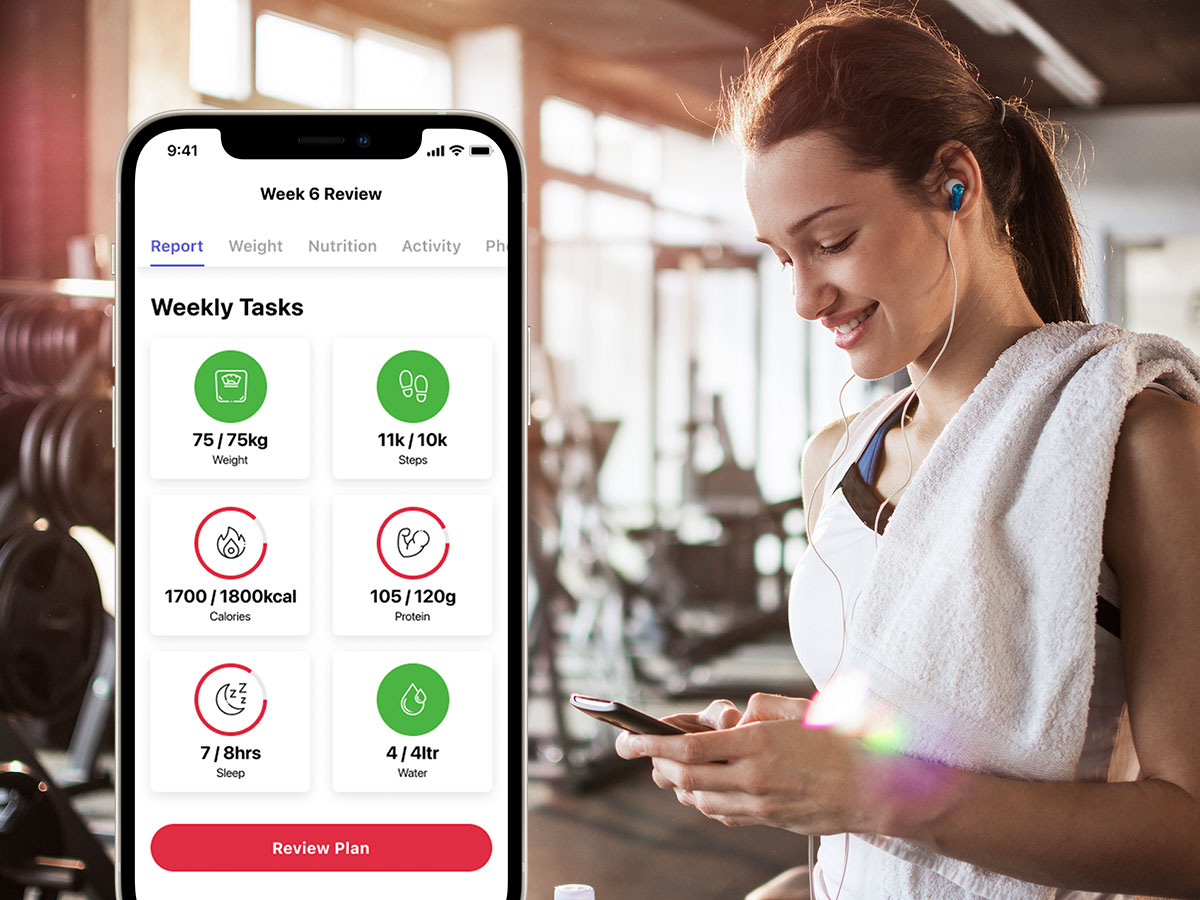
You need to be in a calorie deficit to hit your weight loss goal. Not just day to day, but over the week. That is where tracking your food and, therefore, your calorie intake is key. Using an app like U.P. Transform is useful for helping monitor your diet and ensuring your calorie intake is where it should be to keep losing body fat.
Research consistently supports the idea that Ramadan naturally creates a time-restricted feeding window (roughly 12–16 hours of fasting), which can help you achieve a modest calorie deficit (1,3). The key is to avoid compensating with large, high-calorie meals at night. Aiming for a balanced approach during Iftar and Suhur – high in protein, moderate in complex carbs and healthy fats – will give you the best chance of preserving muscle while burning body fat (9).
2. Plan your meals during Ramadan
Ensuring that you have all your meals planned and prepared in advance means you're far more likely to stick to your diet plan, which ultimately improves long-term weight loss and fat loss success.
If you leave your meals to chance and just grab something when you're hungry, you're more likely to make bad food choices when Iftar comes around.
After a full day of fasting, it's easier to just gorge on the kinds of foods that taste great but are terrible for your body composition goals.
So having healthy meals ready and waiting for when you break your fast that meets your calorie needs and macronutrients goals is key. Become a master of Meal prep, and you will breeze through Ramadan.

3. Meal prep where possible during Ramadan
Meal prep is the easiest and most effective way to stay on track with your diet.
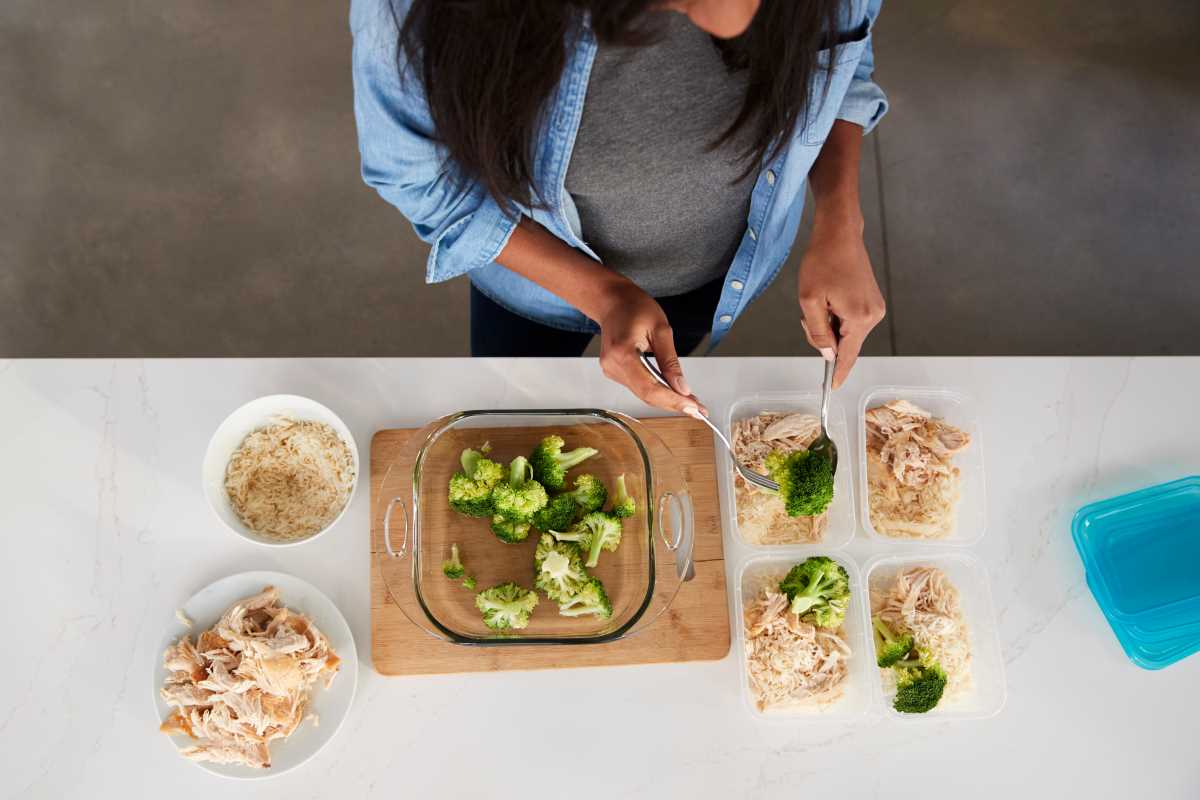
Once you're on a fat loss plan and you know your calorie totals and macronutrient goals, get batch cooking some go-to healthy meals and portion them out in Tupperware boxes ready for when you need them.
Spending an hour or so a week planning your food and meals for the coming seven days over Ramadan will save you loads of cooking time in the long run. Plus, buying and cooking in bulk is more cost-effective than grabbing a meal from a shop or getting food in a restaurant or takeaway.
Prepping at home also means you know exactly what you're getting in your food calories- and macronutrients-wise.
Who knows how many hidden calories are in the so-called 'healthy' foods you will get at your local restaurant or supermarket?
4. Plan for eating out during Ramadan
During Ramadan, there will be times when you will be enjoying social occasions and eating out with family and friends.
It can be challenging to stay on track with your diet when you're out for a meal unless you plan.
It's always advisable to check the menu before you arrive to see which meal best fits your meal plan or dietary needs. You can also order your food ahead of time so you avoid making any impulsive food choices on the spot when you are hungry or faced with temptation.
Keep it simple and go for something like steak and vegetables – you'll be able to track the number of calories on your food tracker app. Say no to 'extras' when you order. Things like coleslaw, onion rings, fries, sauces and added cheese are added extras that will seriously bump up the calorie count of the meals.
Restaurants are always amenable to making food substitutes, so don't be afraid to ask.
Good swaps are fries for green vegetables and salads without dressings and always base your meal around a good source of protein.

5. Mindful eating and portion control
Ramadan's reduced eating window can sometimes lead to overeating at Iftar, driven by a day of hunger. To avoid this:
- Eat slowly: Chew thoroughly and pause between bites. This helps your brain register fullness, preventing overstuffing.
- Use smaller plates: Research shows that plate size influences how much we serve ourselves. A smaller plate can help you control portions subconsciously.
- Start with soup or salad: Low-calorie, high-volume foods can reduce hunger before you get to calorie-dense dishes.
- Listen to satiety cues: If you feel pleasantly full, stop. You can always eat a bit more later in the evening if needed.


