

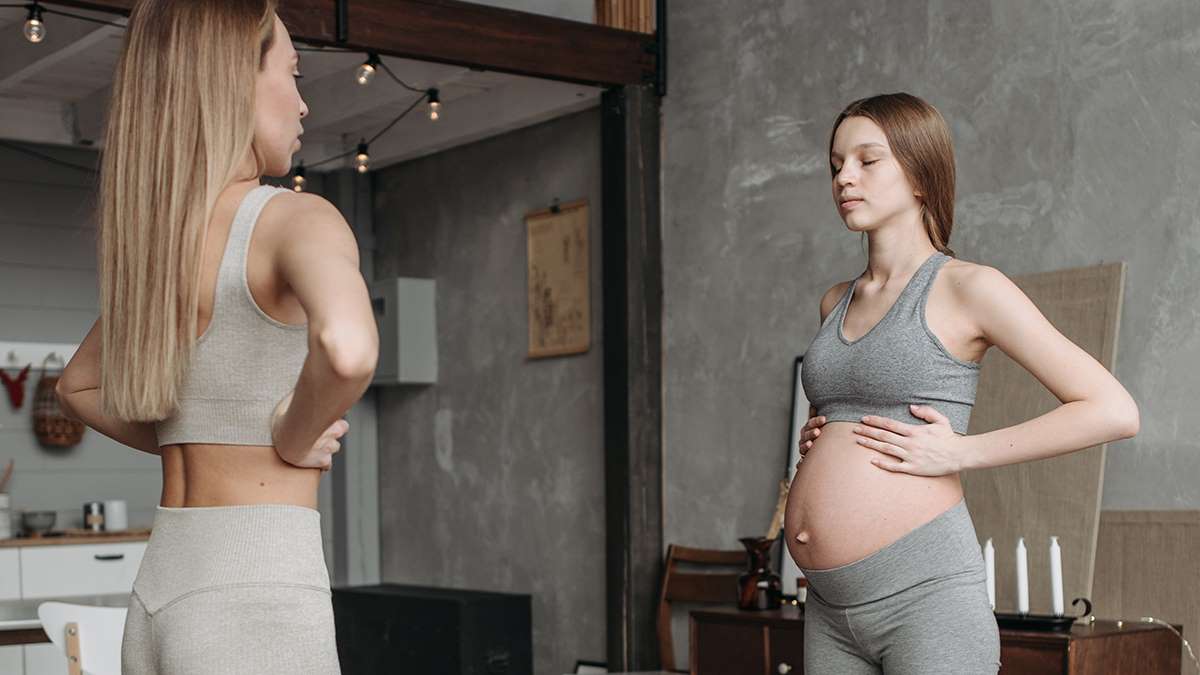
Welcoming a baby into the world is, of course, a joyous event. But along with it comes a host of new challenges; emotional and physical shifts, juggling nappy changes, baby feeds and chores, trying to take care of yourself, all on minimal sleep.
With so much going on, it's hard to find time to focus on yourself and get back to your health and fitness goals.
But in this quick-start guide, find you everything you need to navigate the challenges of a new baby.
We cover everything from getting back to exercise, nutritional pointers, and lifestyle tips you can apply today to help get you through the post-partum period.
How soon can you start exercising?
There are all kinds of conflicting advice from both healthcare providers and online about the 'safest' time to resume training. The general clinical recommendation is to wait at least four to six weeks post-partum before doing any intense exercise.
However, the truth is that whether and when you choose to start exercising again is highly individual and depends on the type of birth. For instance, did you have a vaginal birth or a c-section? Do you have significant diastasis recti or stretching of the linea alba? Did you have any complications during your pregnancy? What kind of training did you do before and during your pregnancy? All these factors affect how quickly you can return to training and what form that takes.

Shilpa got back to training after having a baby to feel amazing again.
Why do doctors recommend waiting before resuming exercise?
The process of growing and giving birth to a baby involves a series of major physical changes, and your body needs time to heal. This is even more important if you had a c-section. C-section deliveries involve cutting multiple layers of tissue and suturing them back together; it's a major operation, and you will need time to heal.
Whether your birth was natural or otherwise, your abdominal muscles are stretched and weakened, or you may have needed treatment for problems like a vaginal laceration (which may require stitches). Don't feel like you have to rush back into training to return to your pre-baby body as quickly as possible. Returning to intense exercise too soon could increase the risk of:
- Bleeding
- Infection
- Muscle injury
- Joint injury
- Back pain
Women are at increased risk of injury post-partum due to the influence of relaxin, a polypeptide hormone that the body releases during the first trimester to allow the stomach to expand. It also increases laxity in the sacroiliac joint to accommodate the growing baby[1]. Relaxin may continue to circulate for several months after birth, so you may find it harder to brace, or your joints may not feel as stable.
However, if you take your time and are careful, there's no reason you can't start reincorporating some form of movement within the first few weeks after birth (if you feel up to it). Make sure you have medical clearance from your doctor to exercise, and always pay close attention to how you feel.
The benefits of post-partum exercise
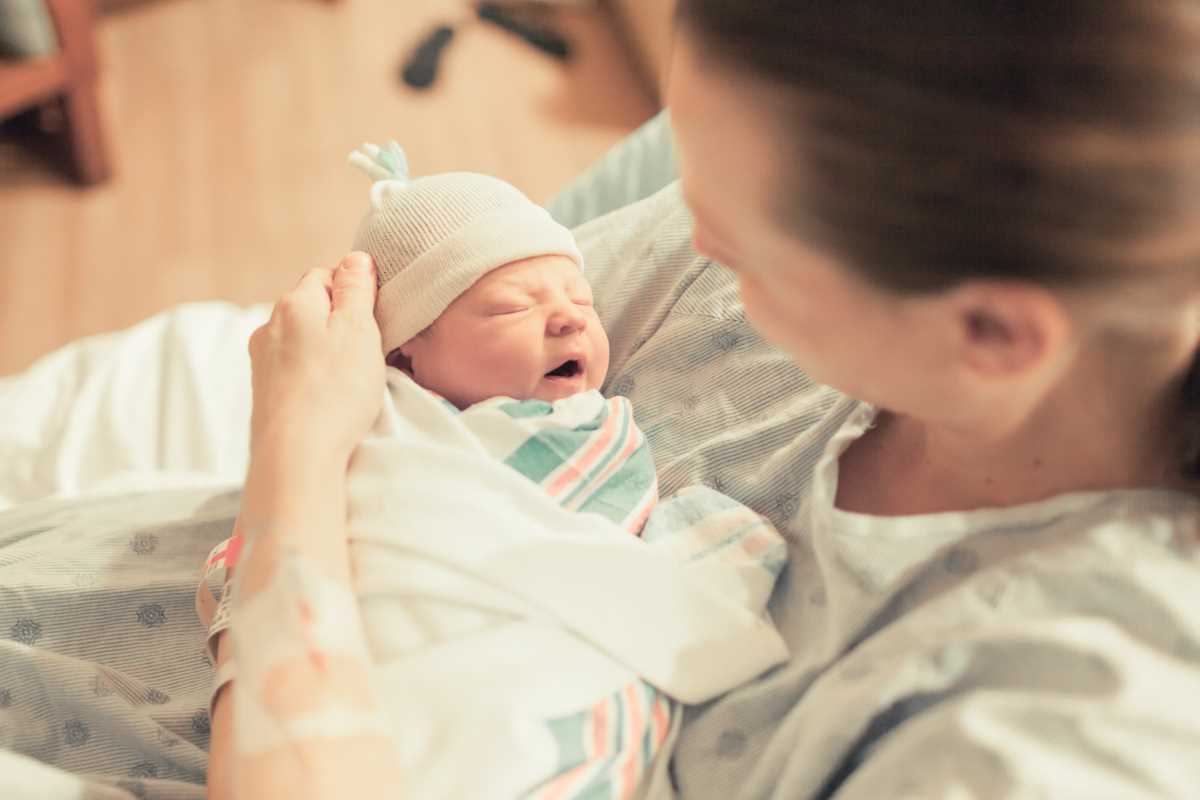
Pregnancy brings about huge changes in your body, and many women feel immense pressure to get their 'pre-baby body' back. Of course, maintaining a healthy body composition is important for you and your baby throughout your pregnancy and beyond[2]. But the focus at this time doesn't need to be pressuring yourself to fit into all your old clothes or hitting a certain weight goal. If you can manage to do any movement or have time to eat a nutritious meal during this time, you're doing great!
We do know, however, that post-partum exercise has several benefits for new mums, including:
- Improved cardiovascular fitness
- Weight loss
- Increased positive mood
- Decreased anxiety
- Decreased risk of postnatal depression
What exercise can you do in the first six weeks?
Even if you don't have the all-clear from your doctor to resume training in full, there are still things you can do to start the recovery process. Three forms of activity you can do in the first few weeks include:
- Walking
- Rebuilding your core
- Strengthening your pelvic floor muscles
If you're concerned about going overboard, remember that your body will let you know if you are exercising too much. It's completely normal to experience some unusual pains while performing everyday talks and generally feel tired. So, before you start exercising, make sure to follow these five guidelines:
- Do not start exercising without first speaking to your doctor or midwife
- Wait until any pain has gone
- Wait for any bleeding to stop
- Pay attention to joint pain or discomfort and stop if it persists
- Keep hydrated. Water is vital both for your bodily processes and producing milk for your baby
Vaginal bleeding or lochia is common after giving birth but if you need to use more than one pad per hour, speak to your doctor.
The first six weeks
It's unlikely that you'll want to go in all guns blazing after giving birth, but when you are ready to start moving, here are three key exercises you can start with. You may be happy to try exercises one and two in the days after giving birth, but it's ok to wait if you don't feel up to it yet.
(With all three exercises, make sure to double-check with your doctor health visitor first).
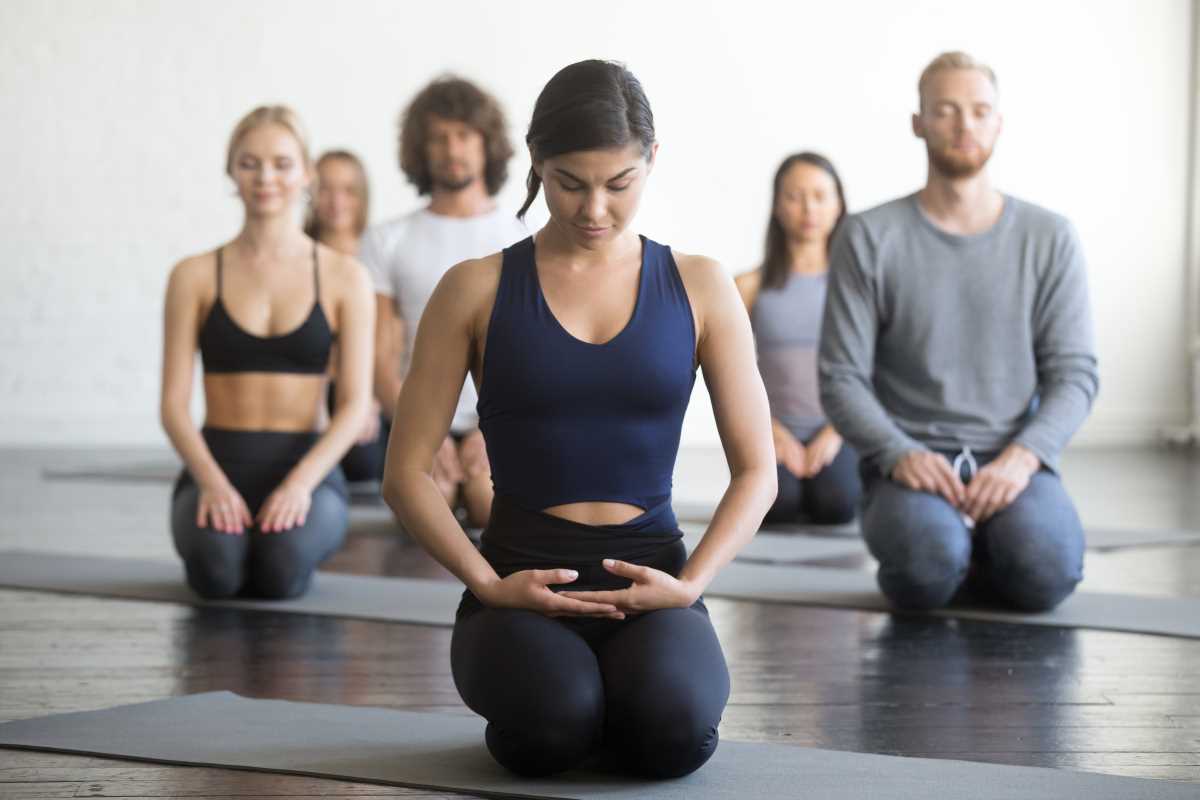
Focus on improving your breathing and core stability
Your core comprises much more than just your 'abs' and includes your diaphragm, the multifidus (which support the lumbar spine), your pelvic floor and your abdominals. Together, these muscles form a box that gives you stability and holds you upright. However, given that they've probably been pushed to their limits through pregnancy, it may take some time to regain their former strength.
Learning how to gain and release tension in your abdominals and pelvic floor will help you regain control of these muscles and connective tissues.
- Start in a lying or side-lying position. If you want to progress the exercise, try sitting; standing is the hardest position.
- As you inhale, it should feel like your ribcage, stomach, and the base of your pelvis are gently filling up with air like a balloon.
- As you exhale, think about breathing the air outwards from your ribcage, stomach and the base of the pelvis.
- Repeat for two sets of ten breaths daily.
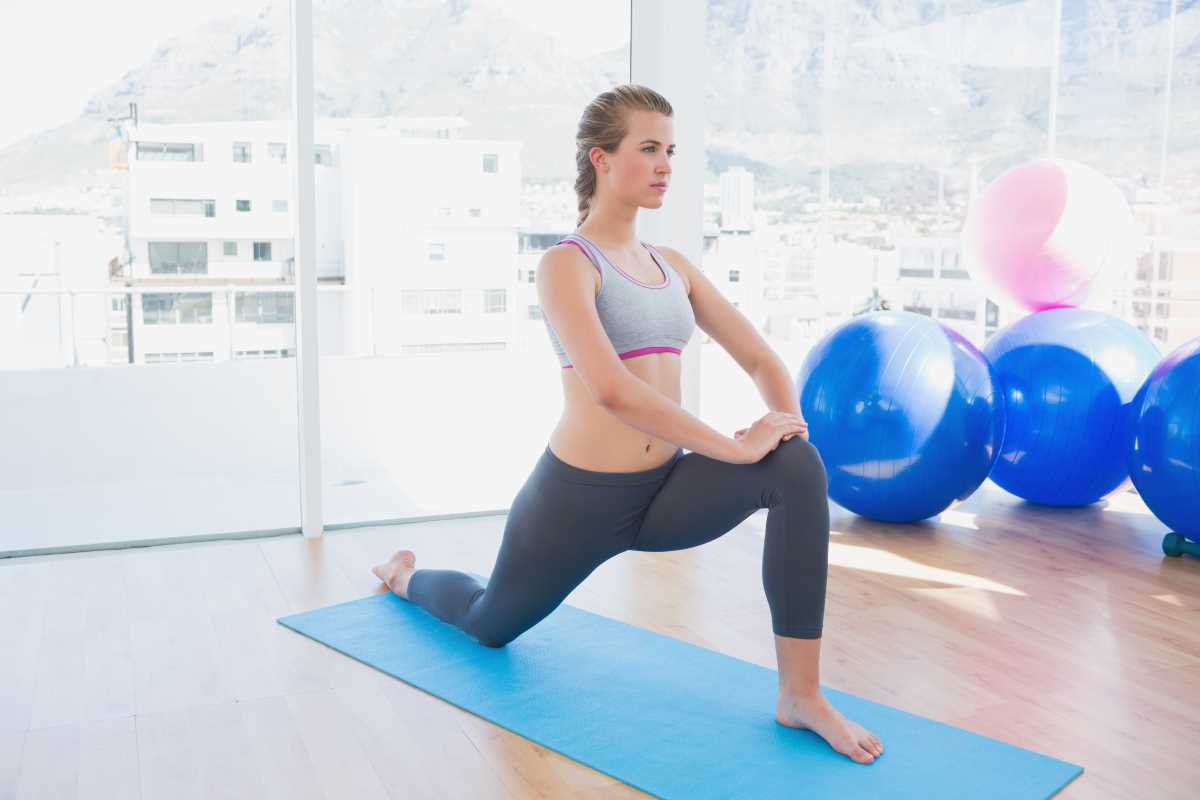
Half-kneeling hip flexor stretch and overhead reach
This movement helps you improve your stability and provides a nice stretch through the diaphragm and ribcage.
- Start in a short lunge stance on the floor, with both knees at a 90-degree angle.
- Make sure to spread your weight evenly through both legs but with a slight emphasis on your back leg.
- Squeeze the glute on your back leg and focus on creating a stretch through your hip flexors and quadriceps.
- On the same side as the knee that is on the floor, reach up and stretch your arm in the air, reaching as far as you can with your fingertips. To open the ribcage further, lean over the front leg.
- Repeat the movement on each side, performing two sets of six to eight reps daily.
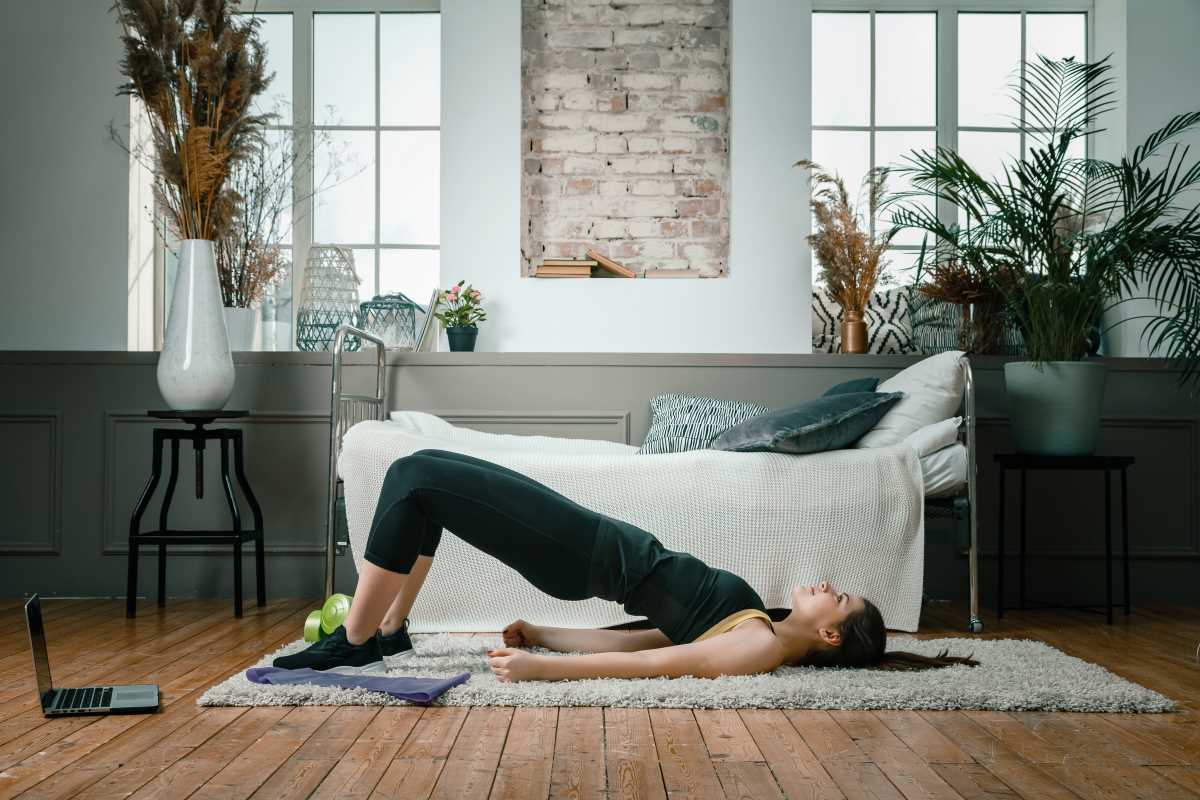
Bodyweight glute bridge
The glute bridge uses the glutes, hamstrings and quadriceps but also requires stabilisation from your core muscles.
- Start by lying on your back on a mat, bending your knees so that your feet are flat on the floor.
- Inhale and focus on keeping your tailbone, spine and head aligned throughout – imagine a ruler running from your tailbone to the top of your head.
- Raise your hips in a bridge position, squeezing your glutes as you move.
- Stop at the top when you can go no further without arching your back.
- Lower slowly to the floor and maintain the ruler along your back, making sure your lower back does not hyperextend.
- Repeat for three sets of 10-12 reps daily.
Exercising after a vaginal birth
If you want to start moving, you can begin the three exercises above within the first day or two after birth but stop if you feel any pain.
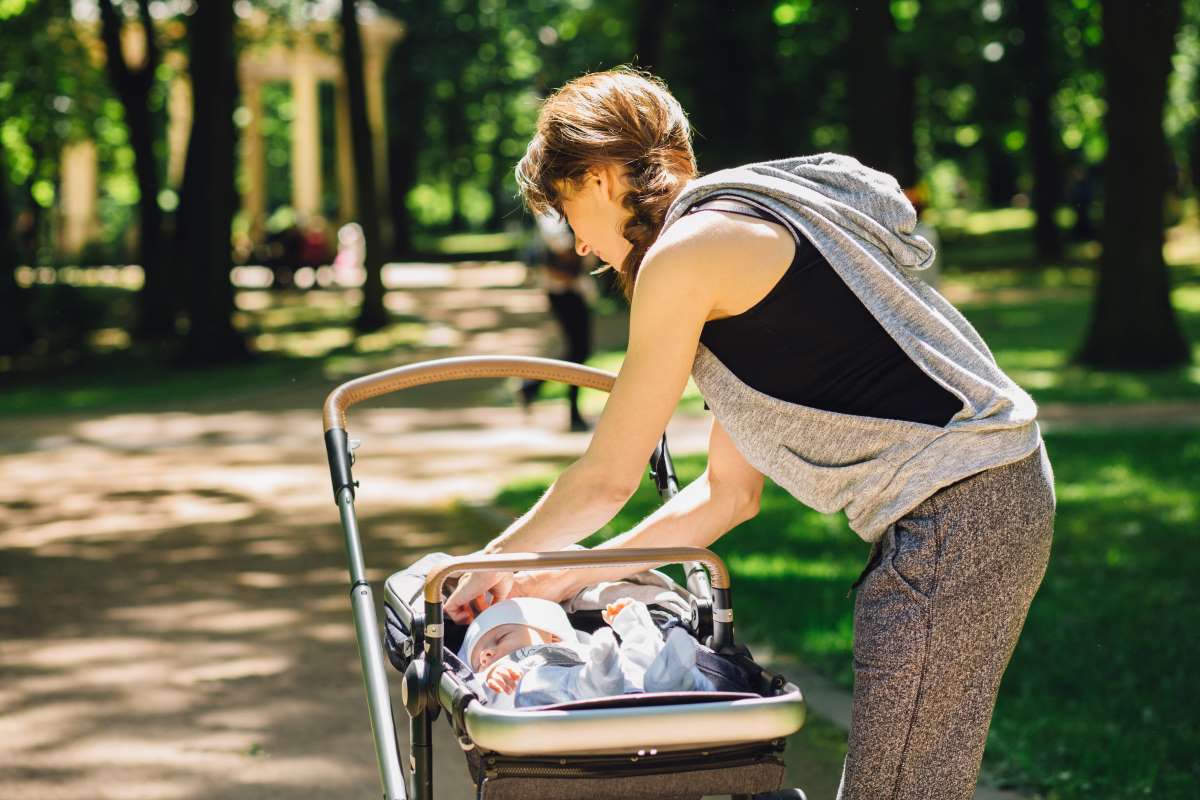
Going for a gentle walk is a good way to get out with baby and get some light steps in when you feel ready. You don't have to be manic about hitting a step count but start at around ten minutes a day and try to build up to a daily 30-minute walk.
However, avoid swimming until any bleeding has stopped for at least seven days and you've had your postnatal check-up with your doctor or midwife (normally six to eight weeks post-partum). You should also wait for the medical all-clear before you go back to the gym. Generally, clinicians recommend waiting around 16 weeks before returning to your previous activity levels.
Exercising after a C-section
A caesarean is a significant operation and represents a major stress on the body. As a result, it's important to take your time and give your body time to heal. Normally, this is at least six weeks. That being said, you can start pelvic floor and breathing exercises from the first day after birth (if you want to). However, it's important to avoid sit-ups, crunches or any exercises that put pressure on the scar or cause your stomach to dome or bulge. Depending on your recovery, you may need to avoid any high-impact exercise for around three to four months after your caesarean.
During the first six weeks, avoid lifting anything heavier than your baby, making sure to hold the baby close to you to prevent any additional strain. It's also a good idea to keep daily supplies and food close to you, so you have everything in easy reach. During the first few weeks, if you cough or sneeze, make sure to hold your scar to protect the incision site.
However, if you feel up to it, there are still some safe forms of exercise you can do in the days after having your baby.
Abdominal bracing
You can use this alongside the breathing exercise above.
- Starting sitting down, standing, lying on one side, on your back or all fours.
- As you take in a deep breath, focus on drawing in as much air as possible and expanding the ribcage.
- As you breathe out, focus on expelling the air as if you're threading through a needle, pulling your belly button in towards your spine.
- Once you've drawn it in as far as you can, hold for 5-10 seconds, breathing normally.
- Repeat 8-12 times, four times a day.
Pelvic floor exercises
- From a sitting position, focus on squeezing and lifting your pelvic floor towards your diaphragm. This should feel like the sensation you experience when you are trying to stop yourself from urinating.
- Once you have contracted the muscle, count to eight or as long as you can hold for, then relax for eight seconds before repeating a further 9-11 times (total of 8-12 reps).
If you are still leaking urine three months post-partum, speak to your doctor, who will be able to recommend further support for strengthening your pelvic floor.
Likewise, if you find it difficult to empty your bowel or bladder, feel a sense of pressure in your vagina or notice a bulge or swelling in your vagina, you could have a prolapse. Speak to your healthcare provider, who will be based placed to advise you.
If you're still experiencing pain, ask your doctor, who can advise on what types of pain relief you can take, especially if you're breastfeeding.
Exercising after six weeks
Before you move on to any high-impact exercise, make sure you have the all-clear from your doctor or midwife to do so. It's also important to check whether your pelvic floor is ready. A simple test is to cough or jump with a full bladder to see if you leak urine. If you don't, you should be ok to exercise.
Exercising with diastasis recti
Diastasis recti refers to the stretching of the linea alba, the connective tissue that connects the rectus abdominis or 'six-pack'. This is a completely natural process that allows the abdomen to expand during pregnancy. It is estimated that up to 100% of pregnant women experience diastasis recti[3]. And research shows that up to 60% of women still experience diastasis six weeks post-partum. Figures indicate that this ranges from mild diastasis (two fingerbreadths) to severe (more than four fingerbreadths)[4].
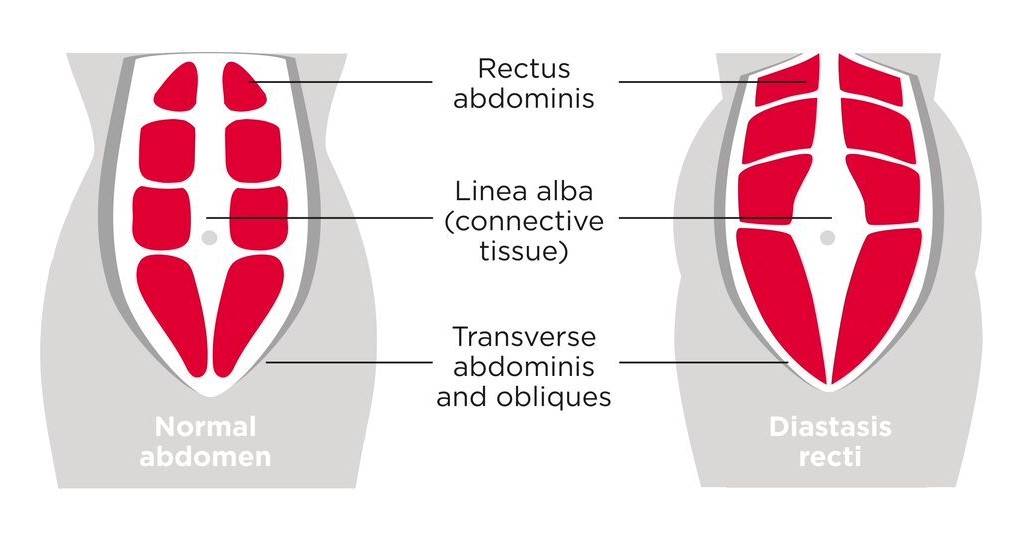
After giving birth and your uterus returns to its pre-baby size, the linea alba should return to normal. However, in some circumstances, depending on genetics, improper breathing and movement mechanics, it may become overstretched and fail to return to its previous state.
Determining diastasis recti
If you believe you have diastasis recti, see your doctor for medical confirmation. However, there are a couple of quick home tests you can do.
Starting from a lying position, gently press two fingertips down the centre line of your stomach from your ribcage to the top of your pubic bone. While your abdominal muscles are relaxed, check to see if you feel any difference in the tension between the muscles. If there is a spot where there is less tension, or it feels like a hole or dip, you may have diastasis.
From this same lying position, place one hand behind your head and focus on lifting your head, neck and shoulders an inch off the ground, focusing on drawing your ribcage and pelvis together. If you notice a bulge in your stomach, this could also indicate diastasis. However, perform step one again and feel for any loss of tension. If you feel a dip or hole, you can test for its width using your fingers.
If you're not sure if you have diastasis, but you often experience back pain, constipation, bloating, poor posture or find it harder to contract your abdominal muscles, speak to your doctor, who will be able to recommend suitable support services.
Exercises for diastasis recti
While you should avoid anything that causes your stomach to bulge or dome, such as crunches, there are other effective core exercises you can incorporate to start the healing process
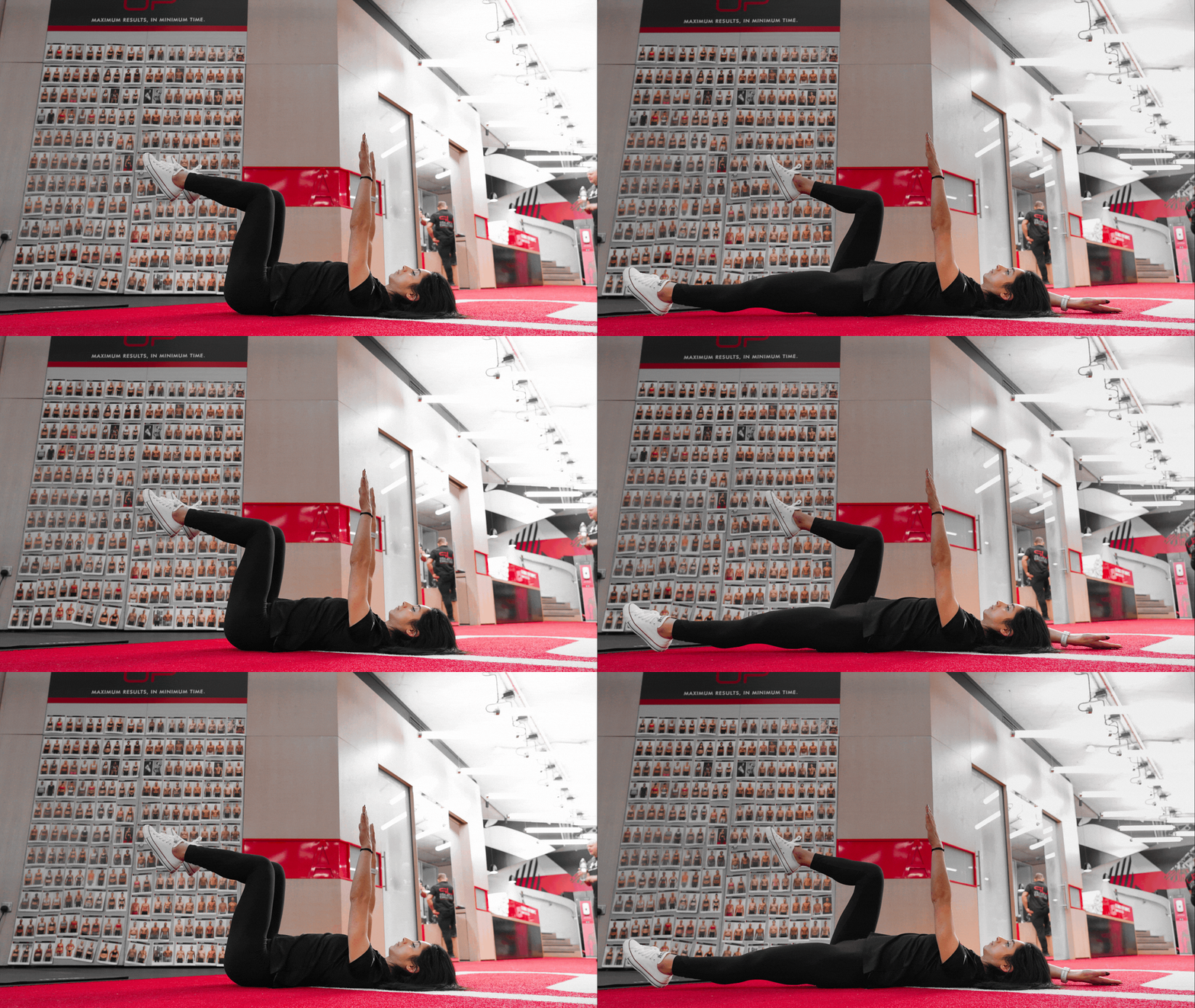
- Start by lying on your back. Aim to pull your sternum down towards your belly button, ensuring that there is no space under your lower back.
- Keep this position throughout the whole movement. In this position, you should feel your core contracting.
- From here, bring your feet off the ground till your knees are in line with your hips. Your arms should be raised in front of you, so the wrist and elbows are directly over the shoulder. This is your start position.
- Straighten one leg out in front of you and simultaneously straighten the opposing arm out behind you before raising into the start position and performing it with the opposing side.
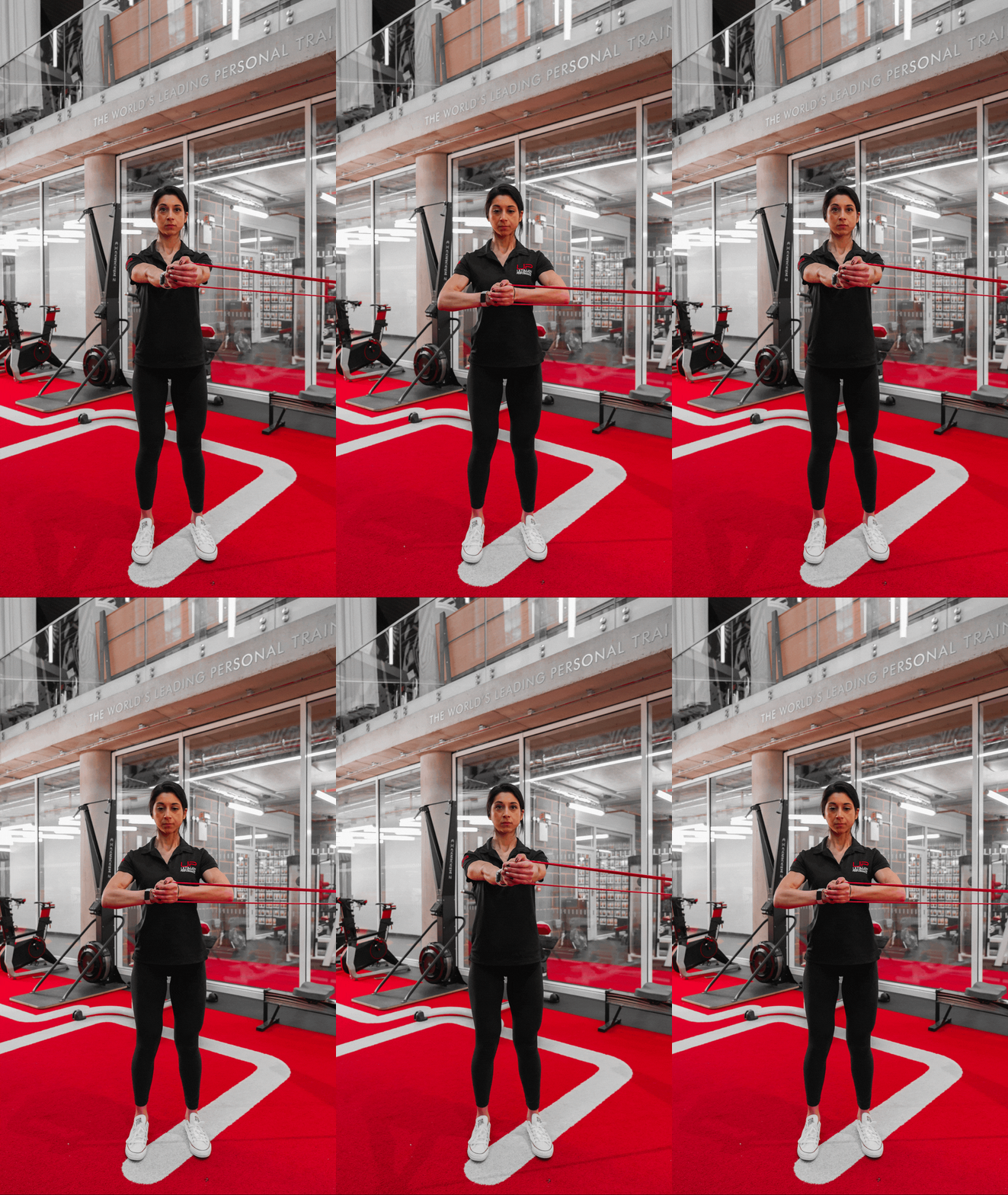
Palov press
- Start with a cable set at the same height as the bottom of your ribcage with a d-handle on one end. Stand so that you are perpendicular to the machine with the cable coming across your body.
- Move far enough away from the stack so that there is tension on the cable.
- Keeping your feet and hips fixed (don't allow them to rotate), bring the cable across to the midline of your body, pause and then extend the arms outwards so that your arms are fully extended in front of your chest.
- Hold this position and resist the pull of the cable to draw you back towards the machine.
- After 5-10 seconds, bring your hands back to the centre.
- Perform all your reps on one side before turning with your other side to the machine and repeating on that side.
If you want to progress the exercise, adopt a narrower stance. Reducing your base of support means your core must work much harder to keep you stable.
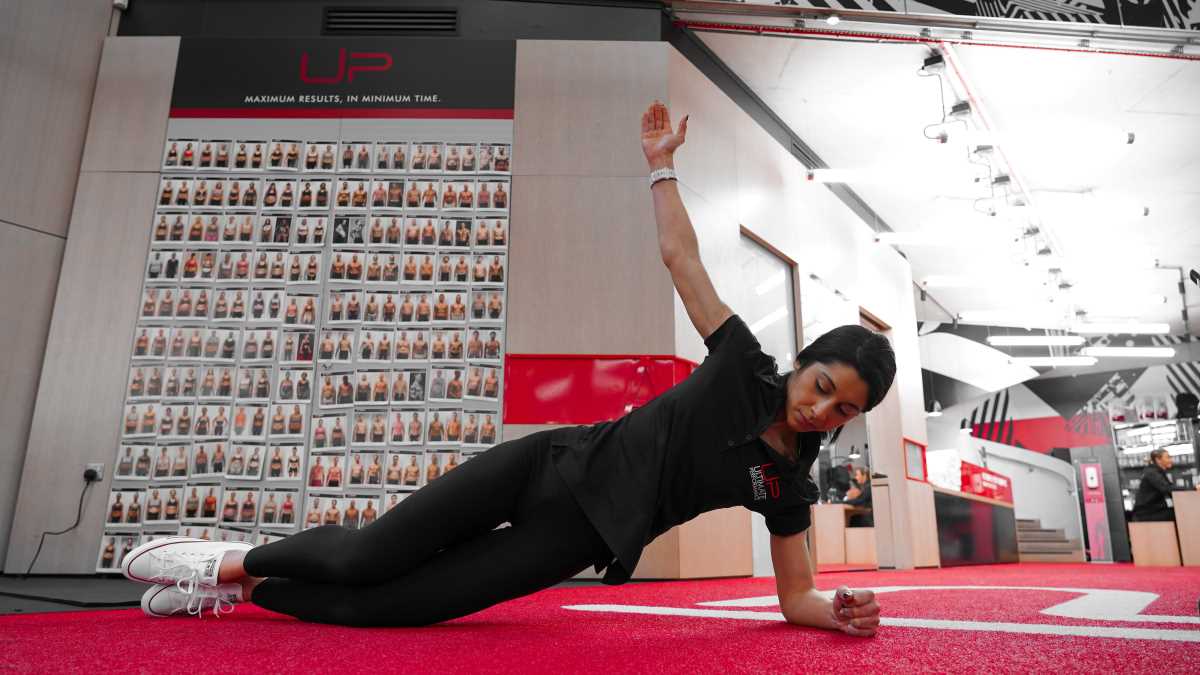
- Lay on to your side with one foot on top of the other.
- Rest your elbow on the ground, ensuring that it sits directly under your shoulder.
- Raise your whole body off the ground keeping contact at only two points – the feet and the elbow.
- Don't allow your hips to drop as you fatigue.
Post-partum nutrition: focus on nutrients not calories
Having a baby is an experience that comes with a swirl of new emotions, stresses and time demands, so don't feel like you have to nail your nutrition straight away. The aim at this time should be to eat in a way that supports your recovery and allows you to provide your baby with the love and care he or she needs. If you can even find time to eat a good meal right now, this is a huge win!
Post-partum calorie requirements
Your calorie requirements after giving birth depend on whether you breastfeed, your body composition and your general activity levels.
If you are not breastfeeding, your nutritional requirements are unlikely to be vastly different to before pregnancy if your body composition has not changed significantly.
For most women who are breastfeeding, your daily calorie requirements may not change too much. While nursing may burn around 450-500 calories per day, keeping your calorie intake similar to pre-pregnancy levels is sufficient to provide plenty of nutrients for your baby as well as aid in weight loss. If you are not trying to lose weight, you may need to increase your calorie intake to match your output.
Focus on maximising your nutrient density
In the immediate post-partum period, you need nutrients to support your energy demands, heal connective tissues and keep your energy levels as stable as possible. You may need to keep going for several hours without a break, so if you can maximise your food quality when you do get a chance to eat, the better you'll be able to care for your baby.
If you are breastfeeding, you are your baby's only source of nutrients. Breast milk is full of minerals your baby needs to grow, including iron, zinc, calcium, sodium, chloride, magnesium, and selenium[5]. These micronutrients are crucial for the development of healthy bones, producing red blood cells and promoting proper muscle and nerve function. Consuming a diet rich in high-quality proteins, healthy fats, and lots of vegetables is the main way you can ensure your baby receives everything he or she needs to grow.
One of the most crucial forms of nutrients your baby needs if you are breastfeeding is DHA, an omega-3 fatty acid found primarily in oily fish. 60% of the total energy in human milk is contributed by lipids, with 10-12% of that coming from essential fatty acids. These unsaturated fats are crucial to the development of your baby's brain, nervous system and vision[6],[7].
We also know that the foods you choose through pregnancy and nursing have a significant impact on your child's food preferences and health outcomes in later life[8],[9],[10]. Early exposure to certain foods, both through pregnancy and breastfeeding, helps positively influence your child's acceptance of foods like green leafy vegetables[11].
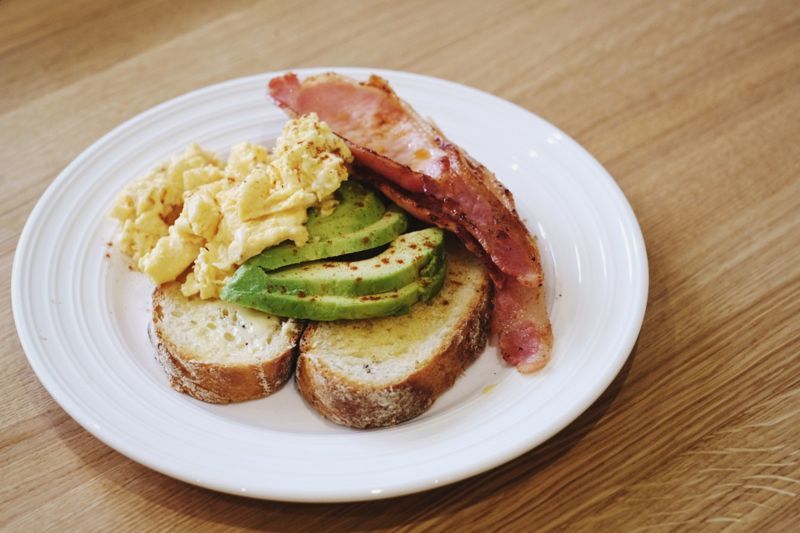
Make protein the star of every meal
Proteins form the building blocks of muscle and tissue, so you will need to ensure adequate intake when your body is healing from a major trauma. An additional benefit of high protein intake is that it is highly satiating, meaning that it will keep you fuller for longer while you're trying to juggle nappy changing, feeding, burping and generally being run off your feet. Protein also has the highest thermic effect of food, and around 20% of its calories are required for digestion. So, even though weight loss doesn't need to be an immediate priority, high protein intake may indirectly help it.
Supplement where needed
While the bulk of your micronutrient intake should come from healthy dietary choices, there are some instances in which supplementation is useful and even essential. For most women, supplementing with folate and vitamin D3 is required to plug nutritional gaps. If you follow a plant-based diet, additional intake of iron, folic acid, B12 and omega-3 fatty acids is essential for ensuring your child's healthy development.
Before you take any supplements, make sure to speak to your doctor or healthcare provider first.
Hydrate
Water accounts for nearly 75% of body weight in infants and 55% in elderly populations; it is crucial for maintaining homeostasis and nearly all physiological processes[12]. Human breast milk is also composed of around 90% water[13]. You don't necessarily need to increase your water intake beyond normal, but because breast milk provides all your child's water requirements, ensuring good hydration is key.
Aim for simple but effective
You don't need to worry about being a super mum right now but keeping things simple will help you stay nourished for yourself and your baby, especially if you've only got one hand and minimal time available. Here are some tips to keep your nutrition stress free and time-efficient:
- Buy pre-prepared vegetables: frozen veg in microwave bags that will be ready in minutes, pre-chopped veg, such as carrots or root veg that can go straight in the oven, pre-chopped onions or mushrooms to add into bigger dishes.
- Make use of your slow cooker or steamer. Anything that's a one-pan wonder is a great option for saving time and making multiple servings you can save for later.
- Buy pre-cooked/ pre-packaged proteins. Go for options like rotisserie chicken, peeled, boiled eggs, high-protein yoghurts in squeezy pouches.
- Keep healthy snacks at the ready. You might not always have time for a proper meal, so keep a few options around you can grab on the go. Nuts, berries, or even options like crudites are more filling than chocolate and will keep you going for longer.
Caffeine and breastfeeding
For as long as you're breastfeeding, aim to minimise your caffeine consumption. This is because whatever you drink, so does your baby. Caffeine in babies can result in prolonged waking or agitation, which is probably the last thing you need![14] Try to restrict your total caffeine intake to no more than 200 mg per day[15]. Don't forget that caffeine is also included in energy drinks, soft drinks, certain foods, and medications.
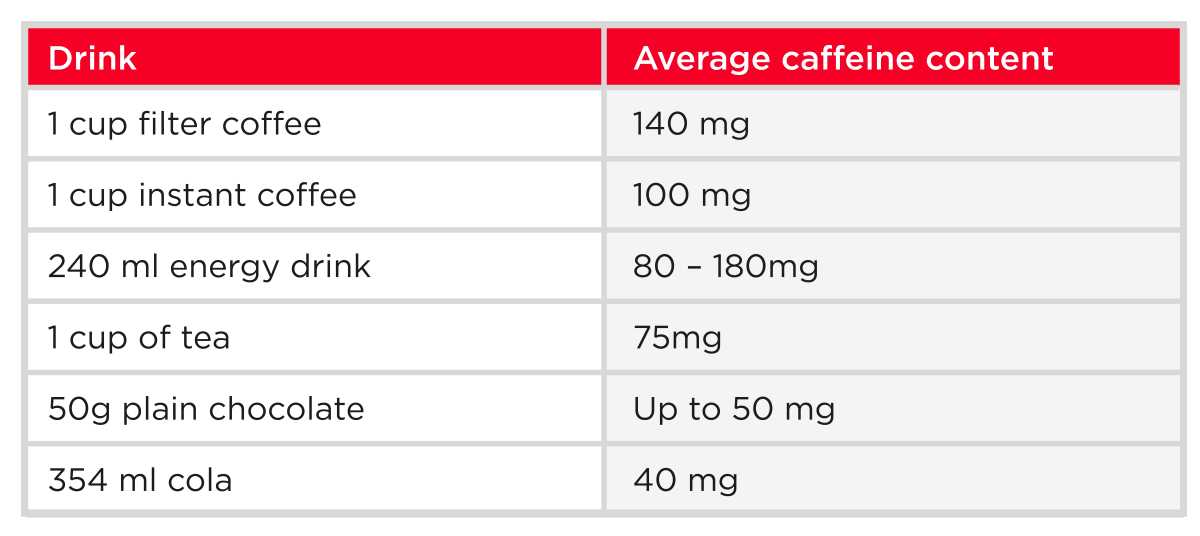
Where possible, opt for decaf versions of tea or coffee or herbal teas. Fruit juice is ok but limit yourself to one 150 ml glass per day[16].
Alcohol and breastfeeding
When it comes to alcohol while breastfeeding, the main thing to remember is that whatever you consume, so does your baby. However, in terms of strict guidelines on drinking, the message is less clear. In the US, the Institute of Medicine advises that women can drink 8 oz (236 ml) of wine, 12 oz (340 ml) of beer or a double shot of spirits (2oz) if they don't breastfeed for a further two hours[17]. In the UK, guidelines state that you should minimise drinking to no more than 14 units per week, making sure to avoid feeding for two to three hours to prevent exposing your baby to any alcohol in your milk.
However, the research into how you need to wait before breastfeeding is again inconclusive. Expressing and pouring away milk, also known as 'pump and dump', relieves breast engorgement. The aim here is to stimulate the breakdown of alcohol rather than remove it from the milk altogether


