

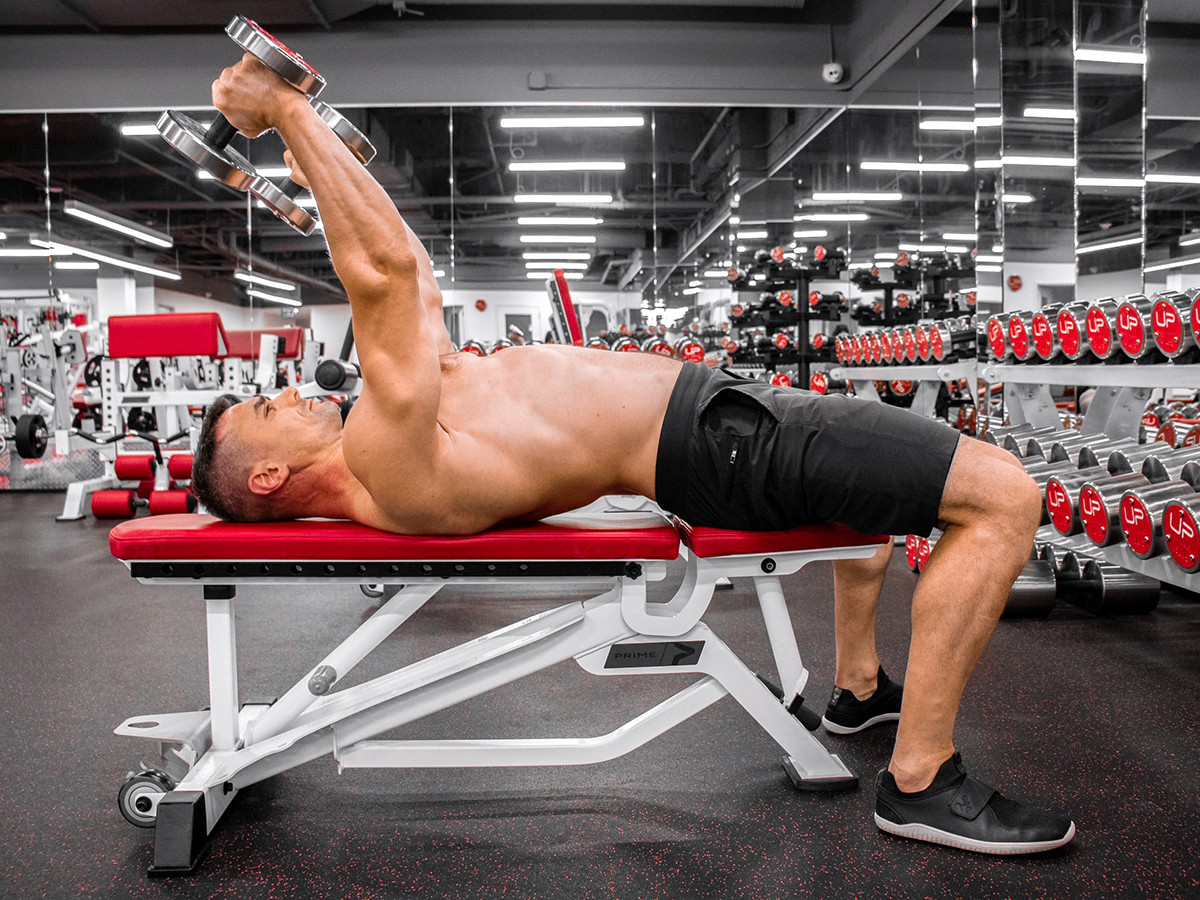
Wave loading is based on the principles of PTP (post-tetanic potentiation) which was contributed to the work done back in the 1980s, by Dietmar Schmidtbleicher, a German strength physiologist.
The outcome of his work showed that fatiguing muscle contractions impair muscle performance, but non-fatiguing muscle contractions at high loads with a brief duration may enhance muscle performance.
This form of training was utilized extensively by the late, world-renowned strength coach Charles Poliquin with athletes in various sports contributing to winning multiple Olympic medals.
There are various forms of wave loading protocols that can be used based on training age and goals.
Here are a few examples below:
3 sets of 3 - 2 - 1 reps or 3 sets of 5 - 3 - 1 reps
Suitable for training populations interested in improving both relative and absolute strength, using weights over 87% of 1RM.
2 sets of 7 - 5 - 3 or 2 sets of 8 - 6 - 4
Suitable for populations interested in improving myofibrillar strength (muscle fibre density without an increase in size), using weights over 80% of 1RM.
In terms of rest, post-tetanic potentiation peaks at around 90-120 seconds after a set and some benefits linger for up to 5 minutes. Therefore, it works great for pairing upper and lower or agonist and antagonist multi-joint exercises. The goal is to start with a baseline weight suitable for the rep ranges prescribed and increase it by 3-5% each 'wave'.
Depending on genetics, nutritional & hormonal status, and recovery, this type of training can be used successfully in blocks of 3-6 weeks with great potential for improving strength.
Below is an example of a periodized program for an advanced trainee looking to improve the 1RM on barbell press, chin-up and deadlift over 2 mesocycles spanning over 6-12 weeks:
Phase 1 (Session 1) : 3 - 6 weeks
| Order | Exercise name | Sets | Reps | Tempo |
| A1 | Low incline barbell press | 2x | 7 - 5 - 3 | 31x0 |
| A2 | NG fat-grip chin-up, medium grip | 2x | 7 - 5 - 3 | 30x1 |
| B1 | Flat dumbbell press | 3-4x | 8 - 10 | 3110 |
| B2 | One arm row with dummbell | 3-4x | 8 - 10 | 3011 |
| C1 | Arms or rotator cuff | 2-3x | 10 - 12 | 2111 |
| C2 | Arms or shoulder work | 2-3x | 10 -12 | 2111 |
Phase 1 (Session 2) : 3 - 6 weeks
| Order | Exercise name | Sets | Reps | Tempo |
| A1 | Deadlift, conventional | 2x | 7 - 5 - 3 | 41x1 |
| B1 | Split squats with DB, front foot elevated | 3-4x | 16 - 20 | 3110 |
| B2 | Incline hip extension with barbell | 3-4x | 8 - 10 | 3011 |
| C1 | Pendulum squat | 2-3x | 10 - 12 | 3110 |
| C2 | Lying leg curl | 2-3x | 10 - 12 | 3011 |
Phase 2 (session 1) : 3 - 6 weeks
| Order | Exercise name | Sets | Reps | Tempo |
| A1 | Flat fat grip barbell press | 2x | 5 - 3 - 1 | 41x0 |
| A2 | NG fat-grip chin-up, medium grip | 2x | 5 - 3 - 1 | 40x1 |
| B1 | Low decline dumbbell press | 3-4x | 6 - 8 | 2111 |
| B2 | Dead stop, one-arm row with dumbbell | 3-4x | 6 - 8 | 2111 |
| C1 | Arms or rotator cuff | 2-3x | 8 - 12 | 2111 |
| C2 | Arms or shoulder work | 2-3x | 8 - 12 | 2111 |
Phase 2 (session 2) : 3 - 6 weeks
| Order | Exercise name | Sets | Reps | Tempo |
| A1 | Deadlift, conventional | 2x | 5 - 3 - 1 | 31x1 |
| B1 | Bulgarian split squats with dumbbells | 3-4x | 12 - 16 | 3111 |
| B2 | GHR | 3-4x | 6 - 8 | 4111 |
| C1 | Pendulum squats with band | 2-3x | 8 - 12 | 2111 |
| C2 | Incline hip extension with dumbbells | 2-3x | 8 - 12 | 2111 |
Disclaimer: This type of training should be done by trainees who want to improve strength or have reached a plateau, and have an intermediate to advance progressive training age (2 years plus), due to the high levels of proficiency and baseline strength required for the big compound lifts.


